Application of Microscopes in the Strategic Emerging Industry of LEDs
LED (Light-Emitting Diode) is the short name for light-emitting diodes. Starting from the second half of 2009, the LED market experienced a rapid leap. As a highly growing emerging industry, the scale of China's LED industry is expected to exceed 500 billion yuan by 2015, including 160 billion yuan for general lighting, 120 billion yuan for large-size LCD TV backlighting, 20 billion yuan for automotive lighting, and 100 billion yuan for landscape lighting, display applications and other sectors.
The LED industrial chain can be roughly divided into three parts: upstream substrate growth and epitaxial wafer manufacturing, midstream chip packaging, and downstream application products. Among the entire industrial chain, the core parts lie in substrate growth and epitaxial wafer manufacturing, which feature relatively high technological content and account for nearly 70% of the industry's output value and profits.
Current Development Trends of the LED Industry
Affected by international and domestic markets and driven by the National Semiconductor Lighting Project, China's LED industry has initially formed a relatively complete industrial chain covering upstream LED substrate materials, production of LED epitaxial wafers, preparation of LED chips, packaging of LED chips, and application of LED products.
It is well known that semiconductor light-emitting diodes offer advantages such as high energy conversion efficiency and long service life, and are regarded as the next-generation light source that will replace traditional light sources currently in use. However, judging from the current performance of light-emitting diodes, many technical challenges still need to be overcome to achieve this goal, requiring intensified research in material analysis and characterization, device analysis technology, and other fields.
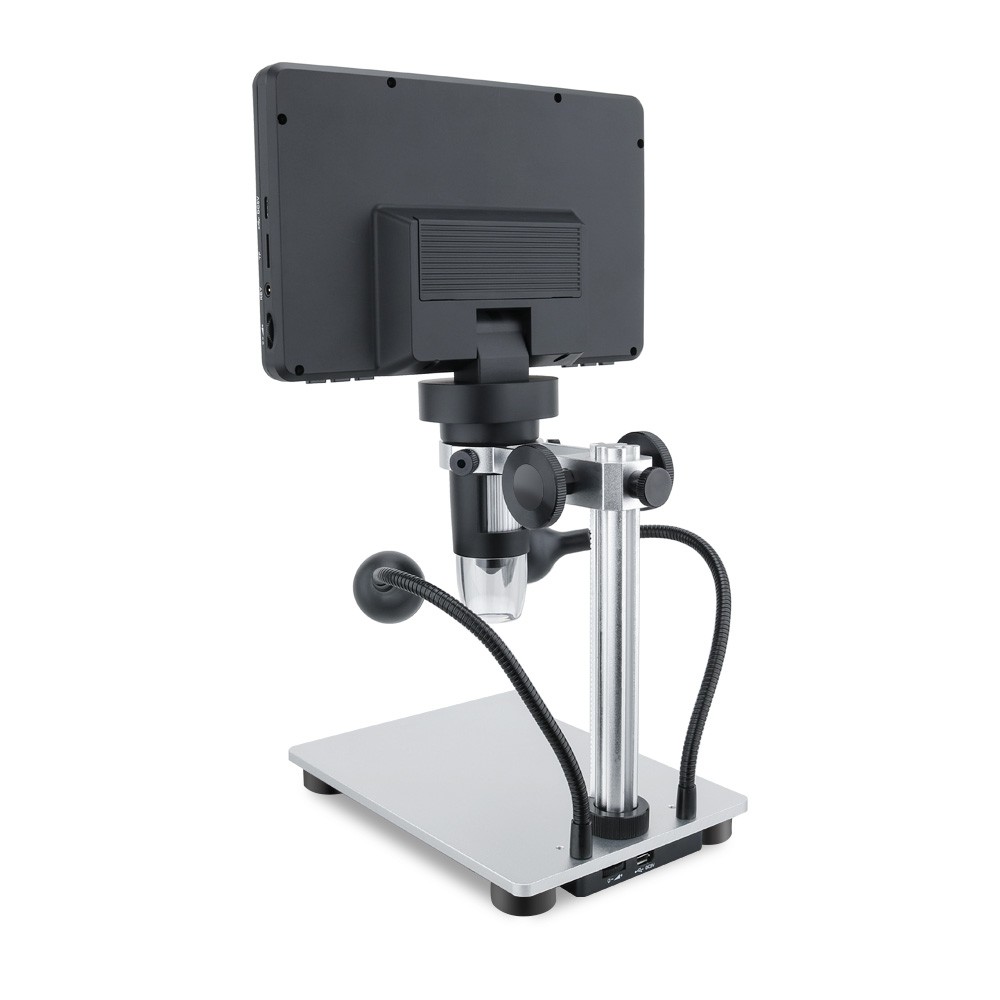
In the analysis of packaging structures of LED devices, as well as the structure, composition and interface conditions of chips, instruments including optical microscopes, scanning electron microscopes (SEM), energy-dispersive X-ray spectroscopy (EDS), and secondary ion mass spectrometry (SIMS) have become indispensable analytical tools for failure and structural analysis of devices, as well as monitoring, optimization and improvement of epitaxial processes.