Differences between Online Infrared Thermometers and Handheld Infrared Thermometers
Online infrared thermometers serve as effective tools for the detection and diagnosis of electronic equipment faults. Fixed infrared thermometers are available in a variety of models, with different series playing vital roles in their respective applicable industries. The key performance indicators of fixed infrared thermometers include spectral response, response time, repeatability, and emissivity. Widely applied in the glass and ceramics industries, paper and packaging industries, various furnace temperature measurement scenarios, and the chemical sector, fixed infrared thermometers monitor the temperature of instruments and equipment to assess operating conditions and ensure stable and normal operation.
Most online infrared thermometers are deployed for on‑site temperature measurement in industrial production. They measure real‑time temperature at specific stages of the production line, transmit and display data in the control room, and can even participate directly in closed‑loop control. Such thermometers are required to deliver long‑term stability and reliable performance.
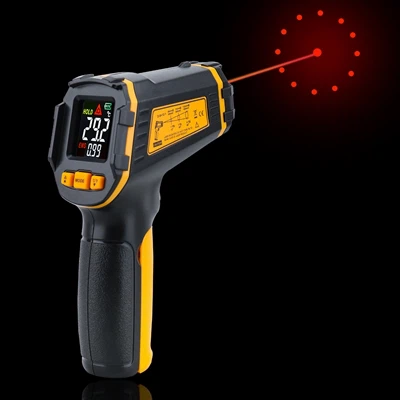
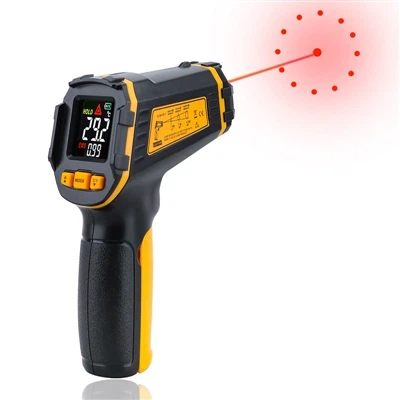
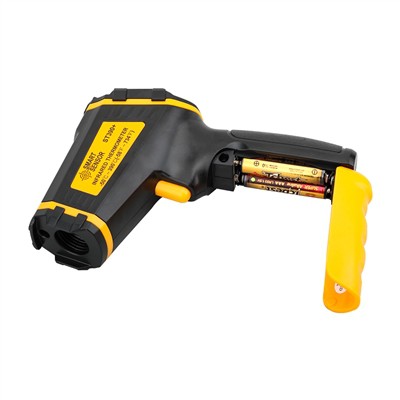
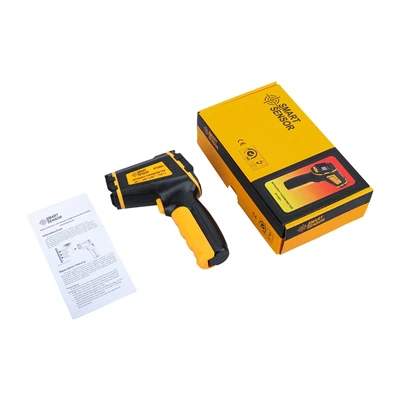
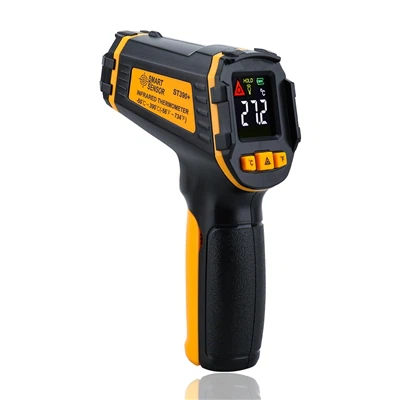
Handheld infrared thermometers are a category of portable infrared measuring devices, featuring a compact design for easy carrying. The two types differ greatly in service conditions and measurement accuracy. Thanks to their portability, handheld infrared thermometers are suitable for both indoor and outdoor environments with few site restrictions, though their measurement accuracy is slightly lower than that of online models.
Online infrared thermometers are bulkier and difficult to relocate, limiting their installation locations, yet they provide high measurement accuracy and support real‑time data comparison and analysis - functions unavailable with handheld devices. Correspondingly, online infrared thermometers are priced higher than handheld versions.
With portable thermal display systems, maintenance personnel can identify potential or existing equipment abnormalities. Typical examples include overheated motor windings, blocked cooling fins on transformers, poor contact of capacitors, and heat accumulation on compressor cylinder heads. Nearly all equipment failures are accompanied by abnormal temperature rises or temperature distributions that deviate significantly from ambient conditions.