Existing Problems in the Selection of Toxic and Harmful Gas Detectors
(1) The detection of flammable gases is more important than the detection of toxic gases.
(2) The detection of gases that may cause acute poisoning is more important than the detection of gases that may cause chronic poisoning.
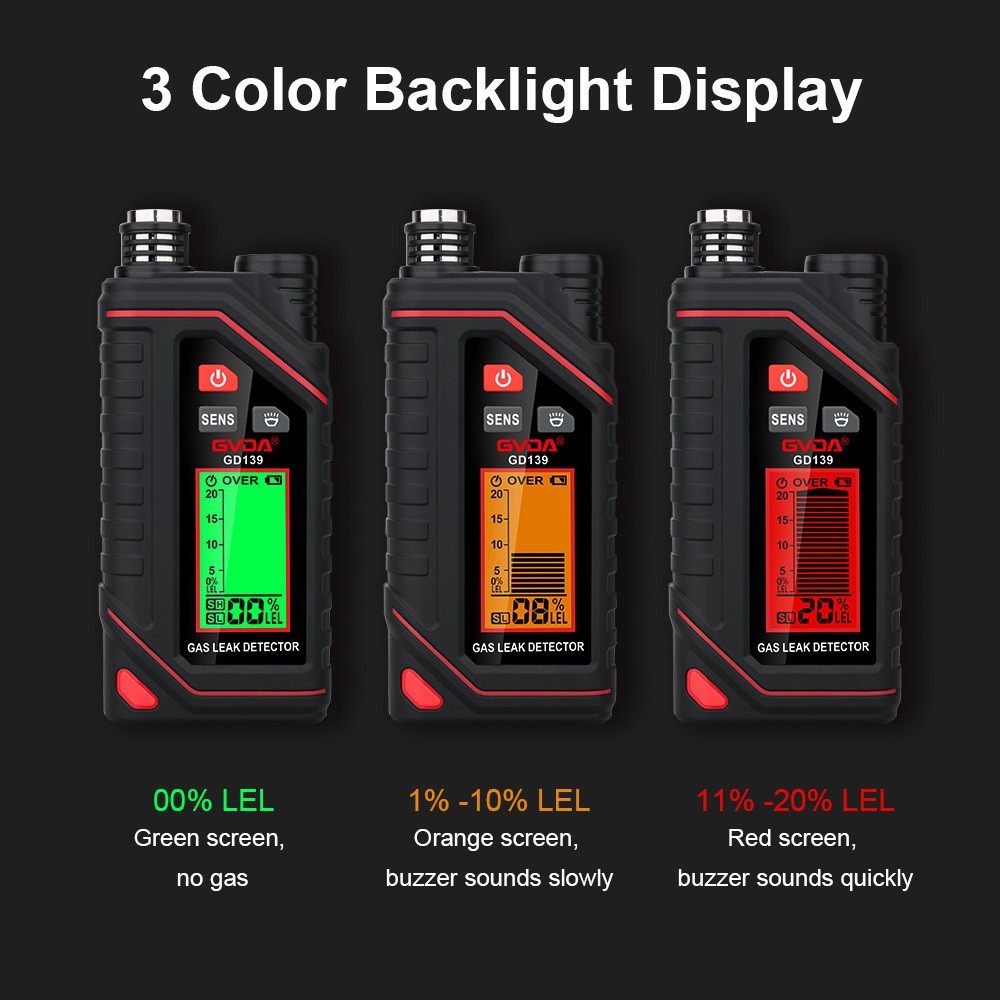
Due to the lessons learned from numerous explosion accidents caused by combustible gas leaks, people attach great importance to combustible gas detection. It can be said that in any petrochemical or chemical plant, the vast majority of hazardous gas detectors are LEL detectors. However, equipping only with LEL detectors is still far from enough to truly protect the safety and health of workers.
It cannot be denied that most volatile hazardous gases are combustible gases, but catalytic combustion combustible gas detectors (LELs) are not the preferred choice for detecting all combustible gases. It is specifically designed for detecting methane, but its detection performance for other substances is relatively poor. So, the lower limit concentration of combustible gases other than methane that they can detect is much higher than their allowable concentration. For example, for hazardous and toxic gases such as benzene and ammonia, simply using a combustible gas detector is a very dangerous approach. For example, the lower explosive limit of benzene is 1.2%, and its correction factor on the LEL detector is 2.51. This means that the displayed concentration of benzene on a LEL detector calibrated with methane is only 40% of its actual concentration!! In this way, the minimum alarm concentration of benzene that can be detected by LEL is 10% LEL=10% * 1.2% * 2.51=3.0 * 10-3, which is nearly 600 times higher than the allowable concentration of benzene of 5 * 10-6!!. Similarly, the alarm concentration of 1.5 * 10-2 for ammonia obtained on the LEL detector is approximately 600 times higher than its allowable concentration of 2.5 * 10-5. Therefore, based on the different gases being detected, choosing a specific toxic gas detector is much safer and more reliable than simply choosing an LEL detector.
In addition, currently we attach great importance to the detection of gases that can cause acute poisoning, such as hydrogen sulfide and hydrogen cyanide. However, we do not pay enough attention to the detection of gases that can cause chronic poisoning, such as aromatic hydrocarbons and alcohols. In fact, the latter poses no less harm to the health and safety of workers than gases that can cause acute poisoning! They may cause cancer and other hidden diseases, affecting the lifespan and health of workers. The emergence of this phenomenon is not only due to cognitive reasons, but also due to the lack of suitable organic gas detectors that can detect lower concentrations in the market in the past.