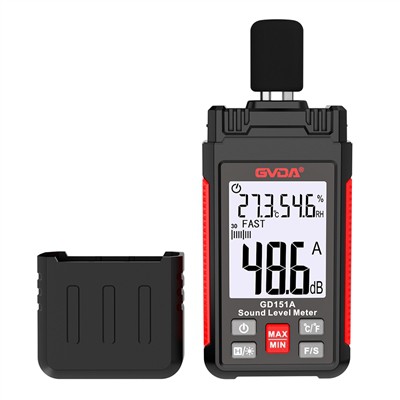
Four key issues should also be noted when using a gas detector:
1. Attention should be paid to the different service lives of gas detectors. When purchasing, it is important to inquire about the service life of the instrument and use it within its warranty period. Some companies, in order to save costs, use a detector for several years without replacing it, and gas detection is only for show, which can ultimately harm others and oneself.
2. We should pay attention to the interference of gas on instrument detection. When detecting gas leaks, we usually use a single gas detector to detect a specific gas, but there is often more than just one gas in the detection environment. Therefore, we need to pay attention to whether other gases will interfere with the instrument's detection and make the detection results inaccurate.
3. Attention should be paid to the concentration range detected by the gas detector. Before detection, in addition to estimating the types of toxic and harmful gases based on experience, it is also necessary to roughly estimate the gas concentration. The gas detector should be set with an alarm value for detection. When the gas concentration exceeds the detection range of the instrument, the detector should be turned off. Prolonged detection of the gas detector in an over range state can cause serious damage to the instrument, leading to inaccurate detection or direct scrapping.
4. Attention should be paid to the maintenance of the instrument. Like other equipment, gas detectors should also be regularly maintained, calibrated and tested irregularly, and stored in a lower temperature environment to extend their service life.
The principle of the detection part is that when the concentration of the combustible gas being measured exceeds the limit value, the amplified bridge circuit outputs a voltage and the circuit detection set voltage. Through the voltage comparator, the square wave generator outputs a set of square wave signals to control the sound and light detection circuit. The buzzer produces continuous sound, and the light-emitting diode flashes to emit a detection signal.
From the principle of combustible gas detector, it can be seen that if electromagnetic interference occurs, it will affect the detection signal and cause data deviation; If there is a collision or vibration that causes the equipment to break, the detection will fail; If the environment is excessively humid or the equipment is flooded, it may also cause a short circuit in the combustible gas detector or a change in the resistance value of the circuit, resulting in detection failure.