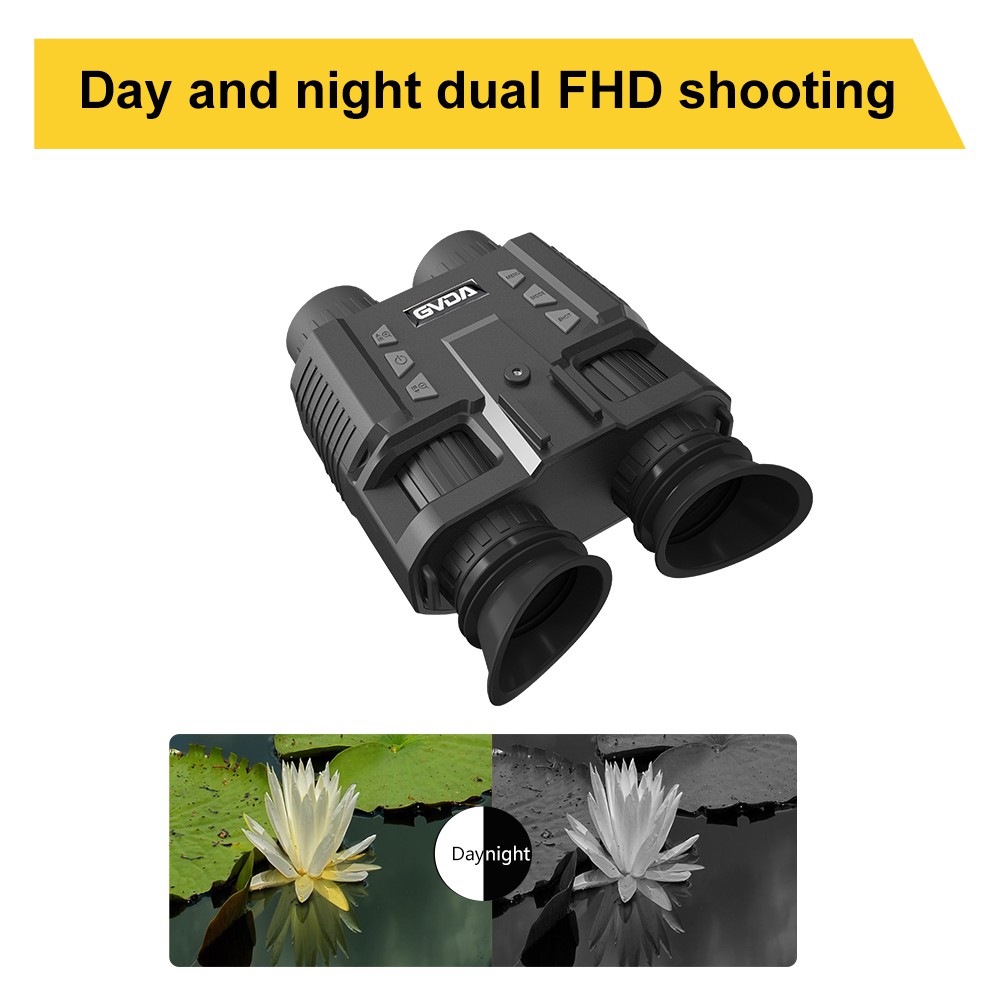
How does a night vision system work?
Night vision technology includes two main types: amplified light (or enhanced weak light) and infrared detection (or heat detection). Most consumer night vision devices are designed to amplify light. All ATN night vision technology products use amplified light. This process utilizes a small amount of light, such as dim light in the surrounding environment (such as moonlight or starlight), to convert light energy (known as photons by scientists) into electrical energy (i.e. electrons). These electrons pass through a thin disk, approximately 1/4 inch in size, containing over 10 million channels. When an electron passes through a pathway, thousands of electrons are knocked out of the pathway wall. These electrons that grow by product are then upconverted back into photons and show you a bright nighttime image, even if it is very dark.
Differences in Night Vision Devices
Night vision devices are classified into first generation, second generation, and third generation according to the level of enhancement tubes.
The third generation is currently the most sophisticated night vision technology among the civilian level. Its surface is coated with a highly sensitive gallium arsenide photocathode coating, which can effectively convert light into electricity under extremely weak light conditions. The third generation provides clear and sharp night vision images. A high-performance image intensifier tube with a minimum of 51lp/mm is 3 units higher than the minimum standard of 45lp/mm. Line per millimeter (lp/mm) is a unit of measurement used in high-resolution image intensifiers to produce clear images.
The second-generation development of the circuit board can generate tens of thousands of electrons. This produces a clear image at night, with no distortion compared to the first and zero generations.
The first generation has issues with distortion and short lifespan of enhancement tubes. It uses materials that are more effective in converting photoelectrons than the zero generation. These devices are all capable of operating at lower light brightness than Generation Zero, known as "starlight brightness". Imported night vision systems typically use first generation image intensifiers, even if they claim to be second generation.
As for the Zero generation, it relies on increasing light energy to enhance external light. The electrons converted by light are concentrated by electrical components and accelerated through a conical device (anode), so they have greater energy when they hit the fluorescent screen, creating an image. Unfortunately, accelerating electrons leads to a decrease in image quality and a shortened lifespan of the picture tube.