How to Ensure the Accuracy of Infrared Thermometer Readings
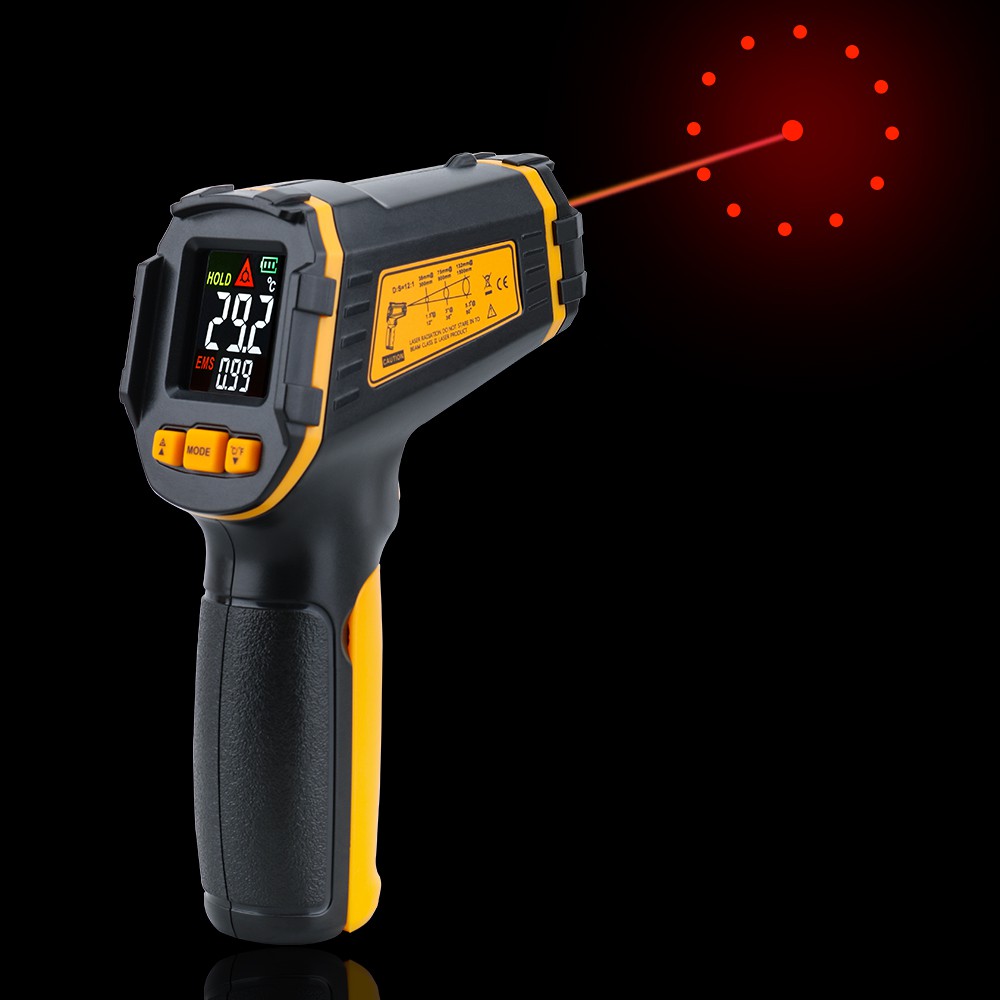
There is a universally recognized understanding of infrared technology and its fundamental principle for accurate temperature measurement. When an infrared thermometer is used for detection, the infrared energy emitted by the measured object is collected by the device's optical system and converted into an electrical signal at the detector. This signal is then processed and displayed as a temperature reading. Several key factors determine precise temperature measurement, among which the most critical are emissivity, field of view, distance-to-spot ratio and spot positioning.
As for emissivity: all objects reflect, transmit and radiate energy, and only radiated energy reflects the actual temperature of an object. When an infrared thermometer measures surface temperature, it receives all three forms of energy. Therefore, every infrared thermometer must be calibrated to capture only radiant energy. Measurement errors are commonly caused by reflected infrared energy from external heat sources.
Some infrared thermometers support adjustable emissivity, and emissivity values for a wide range of materials can be found in standard emissivity reference tables. Other devices adopt a fixed preset emissivity of 0.95, which applies to most organic materials, painted surfaces and oxidized surfaces. For special surfaces with low emissivity, accurate measurement can be achieved by attaching masking tape or applying matte black paint to the measured area for compensation. After the tape or paint reaches thermal equilibrium with the base material, measuring its surface temperature will obtain the true temperature of the object.
Distance-to-spot ratio: The optical system of an infrared thermometer captures energy from a circular measuring spot and focuses it onto the detector. Optical resolution is defined as the ratio of the distance from the thermometer to the target and the size of the measuring spot (D:S). A higher ratio means better optical resolution and a smaller measurable spot size. Laser aiming is designed only to assist in targeting the measuring point. The latest upgrades to infrared optics add close-focus functions, enabling high-precision measurement for tiny target areas and eliminating interference from ambient background temperatures.
Field of view: Ensure the target size is larger than the measuring spot during detection. The smaller the target, the closer the measuring distance should be. For high-precision measurement requirements, the target area shall be at least twice the size of the measuring spot.