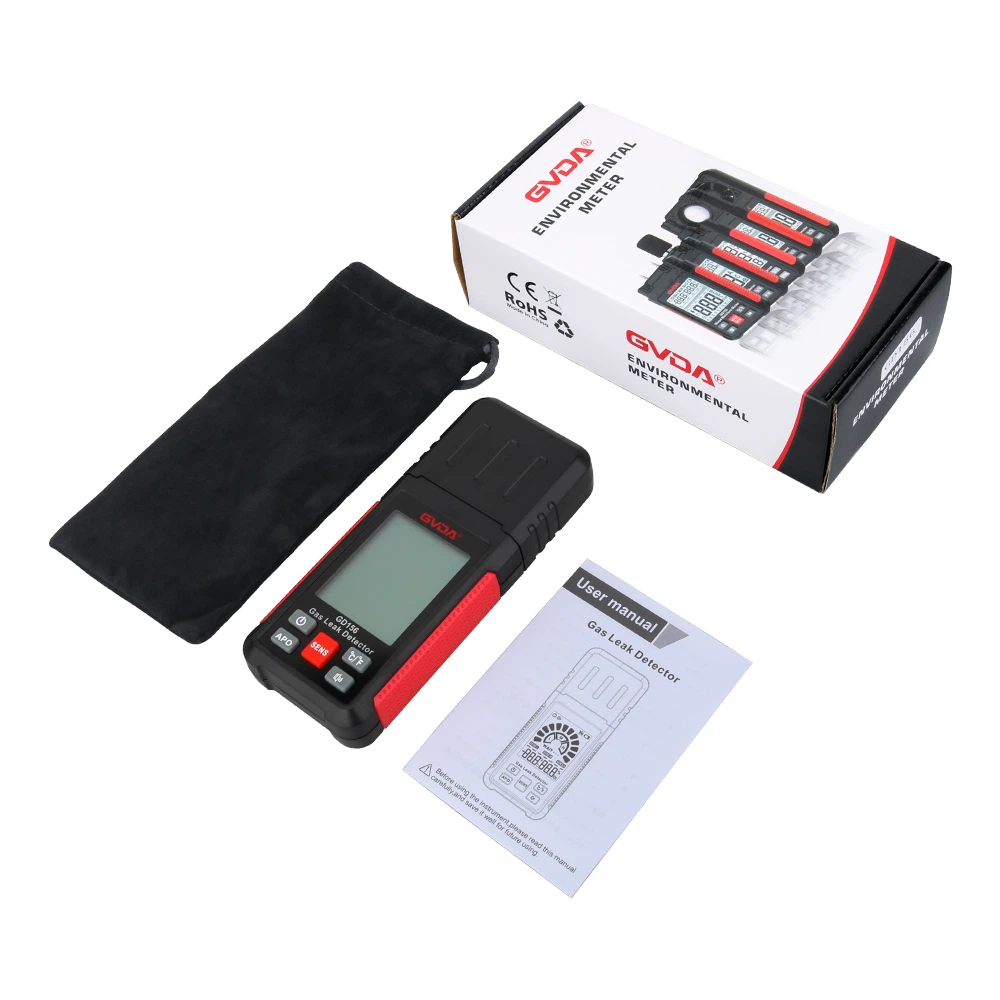
How to handle abnormal readings detected by a gas detector?
1. Check the basic status of the instrument
(1) Confirm that the gas detector has sufficient power supply. Insufficient battery may cause fluctuations or instability in readings;
(2) Check whether the display screen and indicator lights are working properly, whether there is damage or abnormal display;
(3) Check whether the probe and connecting wire are intact and ensure that the connection is tight without looseness.
2. Perform calibration and verification procedures
(1) Perform zero calibration of gas detectors in clean air to ensure accurate display of zero values when there is no target gas present;
(2) Use standard gases of known concentration for range calibration to verify the accuracy of readings;
(3) After the gas detector is calibrated, check the reading again to ensure that the calibration is valid.
3. Identify environmental impact factors
(1) Check whether the environmental wind speed, temperature, and humidity are stable to avoid interference with readings caused by these factors;
(2) Confirm if there are any other gas pollutants or interference sources around, as high concentrations of other gases may cause abnormal readings.
4. Check the condition of the sensor
(1) Observe whether the sensor is damaged, contaminated, or blocked, and clean or replace the sensor if necessary;
(2) Check the sensitivity of the sensor. Failure to calibrate for a long time may result in a decrease in sensitivity and affect the accuracy of readings.
5. Consider equipment aging and develop maintenance plans
(1) Check the service life of the equipment, assess whether there are aging issues, and consider replacing the equipment if necessary;
(2) Develop and implement regular maintenance plans, including cleaning probes, replacing consumables, etc., to ensure that the equipment remains in good condition.
6. Seeking professional maintenance and consultation
(1) If the problem cannot be solved by oneself, one should contact the gas detector manufacturer or a professional maintenance organization for repair;
(2) Consult professional technicians or customer service personnel for professional guidance and advice.
7. Take emergency response measures
If the gas detector detects that the concentration of harmful gases exceeds the safe range, the scene should be immediately evacuated and efforts should be made to find the source of the leak or take other necessary safety measures.