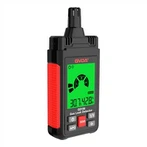
How to solve common faults of gas detectors?
The following common faults:
1. There is no measured gas in the air, but the value fluctuates greatly or jumps;
2. Low concentration gases cannot be detected;
When the value is 0 or the alarm value is not reached in the air, it will also sound an alarm;
4. Incorrect inspection.
How to solve common faults of gas detectors:
1. A short-term zero point variation range less than 1% of the maximum range is considered normal, and a long-term drift of less than 2% of the maximum range when gas is not measured is considered normal. If it exceeds this range, it is necessary to confirm whether there is measured gas on site. The temperature and humidity in the air fluctuate greatly, and the values are unstable.
2. Confirm whether the gas detector has undergone zero point calibration or target point calibration. If there is a detected gas, zero point calibration may not be able to detect low concentration gas. If there is a detected gas, target point calibration should be performed. However, if the calibrated concentration value is inconsistent with the actual concentration value, the value of the gas detector may change significantly or the detected value may decrease.
3. If the problem cannot be solved yet, it is necessary to confirm whether the gas detector has passed through the high concentration gas or the high concentration gas shock gas sensor. If the gas sensor is impacted and aged for 24 hours, if the value is unstable, the gas sensor may be impacted and damaged, requiring replacement.
Low concentration gas cannot be detected
1. Check if the gas pump of the gas detector is working properly. Use your fingers to block the air inlet for 5 seconds. If there is a noticeable attraction, check if the air inlet is blocked.
2. Calibrate the zero point with nitrogen or in clean air, and check after calibration.
3. After calibrating the zero point, if the measured gas cannot be detected, the gas detector needs to be restored to its factory settings.
4. The above steps have been performed, but they cannot be detected. It is necessary to confirm whether there is any gas being measured on site, or if the concentration of the gas being measured is indeed very low and cannot be detected below the minimum detection accuracy of the gas sensor.
Alarm will also be triggered when the value is 0 or the alarm value is not reached in the air
1. Check whether the various alarm parameters of the gas detector have been modified;
2. Check if the alarm mode and mode of the gas detector have been modified;
3. Check if the alarm status of the gas detector is concentration alarm or other fault alarm. The concentration alarm should display the words A1 or A2 and the red light should flash;
4. If the gas detector alarm is caused by manual modification, it can be resolved by restoring the factory installation. The fault alarm needs to be further checked for short circuits, open circuits, poor contact, sensor faults, etc., or returned to the factory for inspection.
Incorrect inspection
1. Confirm whether the on-site gas concentration is correct. There is a significant difference between the theoretical value and the actual value. Use a standard gas calibration gas detector to ensure detection accuracy, or send it to a third-party metrology institution for calibration.