How to Use the Resistance Range of a Multimeter to Check Whether a Circuit Is Grounded
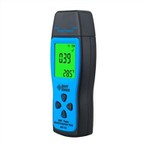
How to use resistance range to measure whether a circuit is grounded? Firstly, regardless of any circuit or equipment being measured, the voltage must be measured to ensure safety and no voltage before proceeding with other measurements. If the equipment has capacitance impedance, it must be discharged first before determining safety and no voltage; Then adjust the gear of the multimeter to the 2000 megohm gear, with one probe in contact with the grounding body or the metal casing of the device, and the other probe in contact with a normally charged conductor of the device or circuit. If the resistance is less than 0.5 megohm, it is considered grounded. Generally, circuits or equipment larger than 0.5 megaohms and 30 milliamps will not trip for protection, so it is generally considered that the circuit or equipment is not grounded. But it also depends on the operating voltage or various technical requirements of the equipment or circuit.
In daily life, as for the wide range of circuits, I don't know which type of circuit you are referring to. There are circuits, there are electricity circuits that transmit voltage, there are circuits, etc. Taking these three commonly used circuits as examples, let's talk about how to use a multimeter resistor to measure whether it is grounded.
1, Electronic circuits, in general, for measuring electronic circuits, choose universal
The gear of the meter is set to the maximum gear of 10k, and the measured resistance value is almost 10K. The pointer is moved slightly, and then the probe is swapped for measurement. Some electrical probes may be different after swapping, and the difference may be small or small. Because in electronic circuits, high-frequency capacitors are installed to resist high-frequency interference, it is normal to measure a certain value to ground. Therefore, it usually makes people feel numb, and this type of circuit cannot be measured with a shaking table, which can damage electronic components.
2, For voltage transmission circuits, taking household lighting circuits as an example, before measurement, the switch must be disconnected, and the switches of each electrical appliance must also be disconnected. Then, the grounding situation should be measured. If a multimeter is used to measure the resistance of the circuit to ground, the resistance of the live and neutral wires should be infinite. Even if a multimeter is used to measure this type of circuit, using a 2 megohm range is far from enough, because the voltage of the stacked batteries in the multimeter is only 9 volts, and the lighting voltage is around 220 volts. If conditions permit, a 500 volt (to be called a shaking meter) can be used. The measured resistance must be greater than 0 or 5 megohms to ensure that the circuit does not leak electricity.
3, The measurement of motor circuit to ground cannot be done with a multimeter. Similarly, a 500 volt megohmmeter should be used for measurement. The resistance of the coil circuit to ground must also be greater than 0.5 megohms to be considered safe. If it is a newly wound motor coil, the resistance to ground must be greater than 10 megohms. So each type of circuit has different requirements for the resistance to ground, with higher voltage requirements requiring greater insulation resistance to ground.