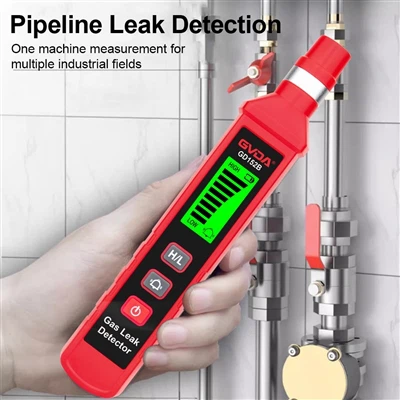
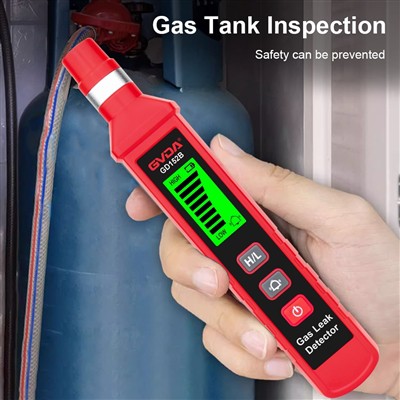
Identification of Toxic and Harmful Gas Detectors
At present, with the development of manufacturing technology, gas detectors are also a new choice for us. Since this detector can be equipped with multiple gas (inorganic/organic) detection sensors required on one host, it has the characteristics of small size, light weight, fast response, and multi-gas concentration display at the same time. More importantly, the price of the pump-suction compound gas detector is cheaper than multiple single-diffusion gas detectors, and it is more convenient to use. It should be noted that when choosing this type of detector, it is best to choose an instrument with the function of switching each sensor separately to prevent the damage of one sensor from affecting the use of other sensors. At the same time, in order to avoid the blockage of the suction pump due to water inflow, etc., it is safer to choose an instrument designed with a smart pump with a pump stop alarm.
Issues to be aware of when using a gas detector:
1) Pay attention to the detection interference between various sensors.
Generally speaking, each sensor corresponds to a specific detection gas, but any gas detector cannot be absolutely specific. Therefore, when selecting a gas sensor, it is necessary to understand the detection interference of other gases to the sensor as much as possible, so as to ensure its accurate detection of specific gases.
2) Pay attention to regular calibration and testing.
Toxic and harmful gas detectors, like other analytical and testing instruments, are measured by a relative comparison method: first, a zero gas and a standard concentration gas are used to calibrate the instrument, and the standard curve is obtained and stored in the instrument. During the measurement, the instrument compares the electrical signal generated by the gas concentration to be measured with the electrical signal of the standard concentration, and calculates an accurate gas concentration value. Therefore, zeroing the instrument at any time and frequently calibrating the instrument are essential tasks to ensure the accuracy of the instrument measurement. It should be noted that many gas detectors can replace the detection sensor at present, but this does not mean that a detector can be equipped with different detector probes at any time. Whenever the probe is changed, the instrument must be recalibrated in addition to the sensor activation time. In addition, it is recommended to test the response of the standard gas used for the instrument before using it to ensure that the instrument really plays a protective role.
3) Pay attention to the concentration measurement range of the detection instrument:
All kinds of toxic and harmful gas detectors have their fixed detection range. Only when the measurement is completed within its [Industrial Electrical Network-cnelc] measurement range can the instrument be accurately measured. If the measurement is performed beyond the measurement range for a long time, it may cause permanent damage to the sensor.
For example, if an LEL detector is accidentally used in an environment with more than 100% LEL, it may completely burn the sensor. As for the toxic gas detector, it will also cause damage if it is used at a higher concentration for a long time. Therefore, if the fixed instrument sends an over-limit signal during use, the measurement circuit should be turned off immediately to ensure the safety of the sensor.
Table Concentration detection range, resolution, allowable concentration and maximum acceptable concentration (ppm) of common gas sensors
Sensor Detection Range Resolution TWA Maximum Concentration Carbon Monoxide 0-5001251500 Hydrogen Sulfide 0-100110500 Sulfur Dioxide 0-200.12150 Nitric Oxide 0-2501251000 Ammonia 0-50125200 Hydrogen Ammonia 0-100110100 Nitrogen 0-100.10.530VOC 0-100000.1-Unlimited
4) Pay attention to the life of various sensors:
All kinds of gas sensors have a certain service life, that is, life. Generally speaking, in portable instruments, LEL sensors have a longer service life, which can generally be used for about three years; photoionization detectors have a service life of four years or longer; In one to two years; the life of the oxygen sensor is the shortest, about one year. The life of the electrochemical sensor depends on the dryness of the electrolyte, so if it is not used for a long time, sealing it in a lower temperature environment can prolong its service life. Due to the relatively large size of the fixed instrument, the life of the sensor is also longer. Therefore, it is necessary to test the sensor at any time, use it within the validity period of the sensor as much as possible, and replace it in time if it fails.
In short, toxic and harmful gas detectors are powerful tools to ensure industrial safety and staff health. We need to choose the appropriate gas detector according to the specific use environment and required functions. At present, the detectors available to us include fixed/portable, diffusion/pump suction, single gas/multi-gas, inorganic gas/organic gas and many other combinations. Only by choosing a suitable gas detection instrument can we truly achieve twice the result with half the effort and prevent problems before they happen.