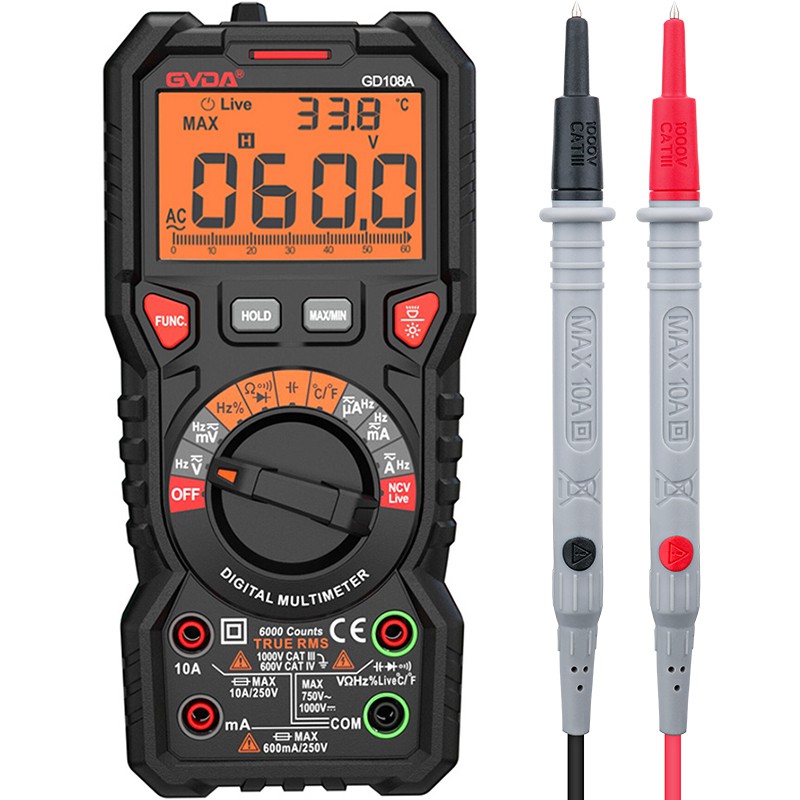
Resistance is measured at the electrical barrier. Resistance values vary widely, from a few milliohms (mΩ) for contact resistance to billions of ohms for insulation resistance. Many DMMs measure resistances as small as 0.1 ohms, and some measurements can be as high as 300 megohms (300,000,000ohms). If the resistance is extremely large, the Fluke multimeter will display "OL", indicating that the measured resistance exceeds the range. When measuring an open circuit, "OL" is displayed.
Resistance must be measured with circuit power off, otherwise damage to the meter or circuit board will occur. Some digital multimeters provide a function of protection when a voltage signal is mistakenly connected in resistance mode. Different models of DMMs have different protection capabilities.
For accurate measurements of low resistance, the resistance of the measuring lead must be subtracted from the measured value. Typical test lead resistance values are between 0.2Ω and 0.5Ω. If the resistance of the test leads is greater than 1Ω, the test leads should be replaced.
If the digital multimeter supplies less than 0.6V DC voltage to measure the resistance, it can measure the resistance value of the circuit board isolated by the diode or semiconductor. It can be tested without removing the resistor.