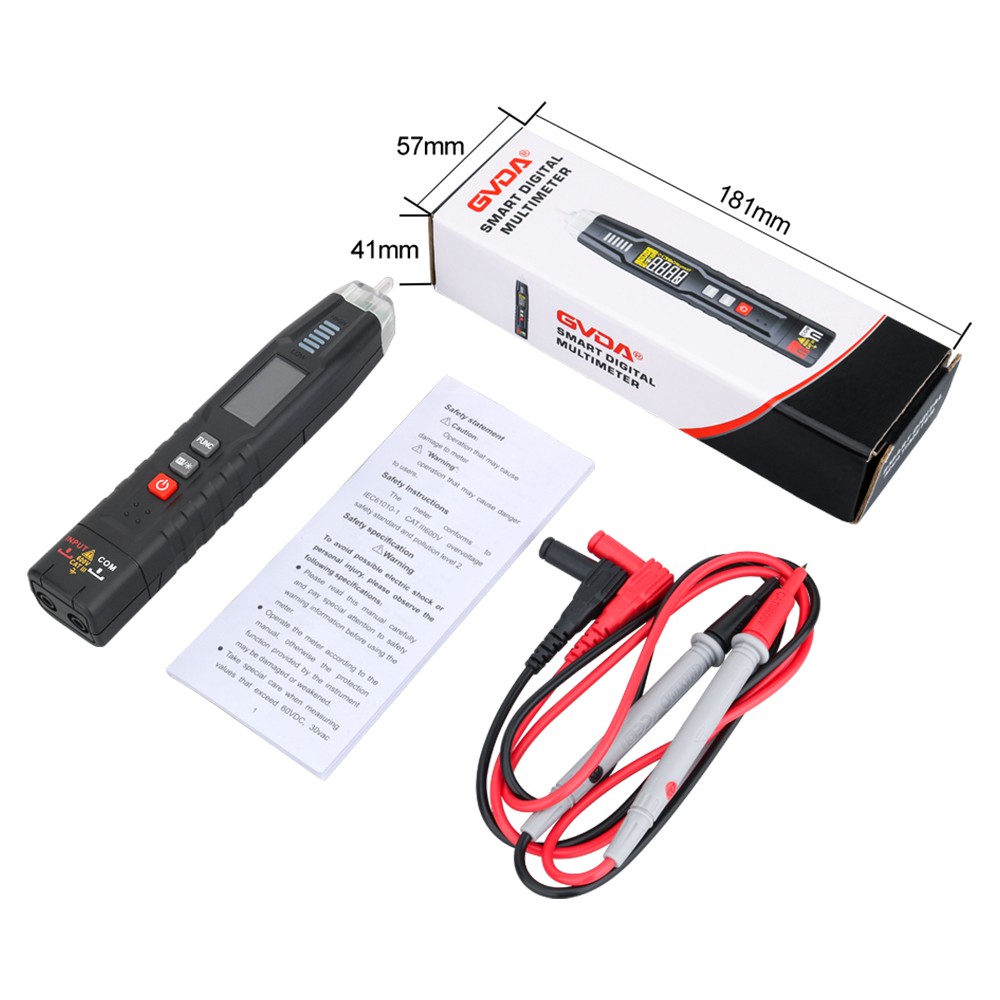
Methods of Current Detection for Automobiles Using a Multimeter
Method 1: Use a regular multimeter current mode, connect it in series into the circuit, and measure it.
Method 2: Connect a small test lamp in series between the battery cable and the battery pole for testing.
Method 3: Use a clamp type DC multimeter for testing. This method does not require disconnecting the original vehicle line, but instead clamps the induction clip of the DC multimeter onto the measured wire for inductive detection.
The specific operation of Method 1 is as follows. When using a regular digital multimeter to detect battery leakage current, the positive pole or pole clamp of the battery should be removed, and then the red probe of the multimeter should be inserted into the 20A socket, and the black probe should be connected to the common terminal (COM). Then, the multimeter gear switch should be pulled to the 20A current gear, and connected in series between the disassembled battery pole and the battery clamp. The schematic diagram of using a regular multimeter to detect current is shown in the figure.
Use a regular multimeter to measure the current
The simplest method to detect whether there is leakage in the electrical equipment of the entire vehicle is to connect a small test lamp in series with the battery line for testing. This method was not used as frequently as digital multimeters in the early days. Using a small test lamp to connect the battery pole and the wire in series, and judging whether there is leakage based on the brightness of the bulb, this method is recommended but cannot clearly display the specific leakage current. It is no longer used. Because the price of a multimeter is already very cheap, it has now switched to method 1 or method 3 for testing.