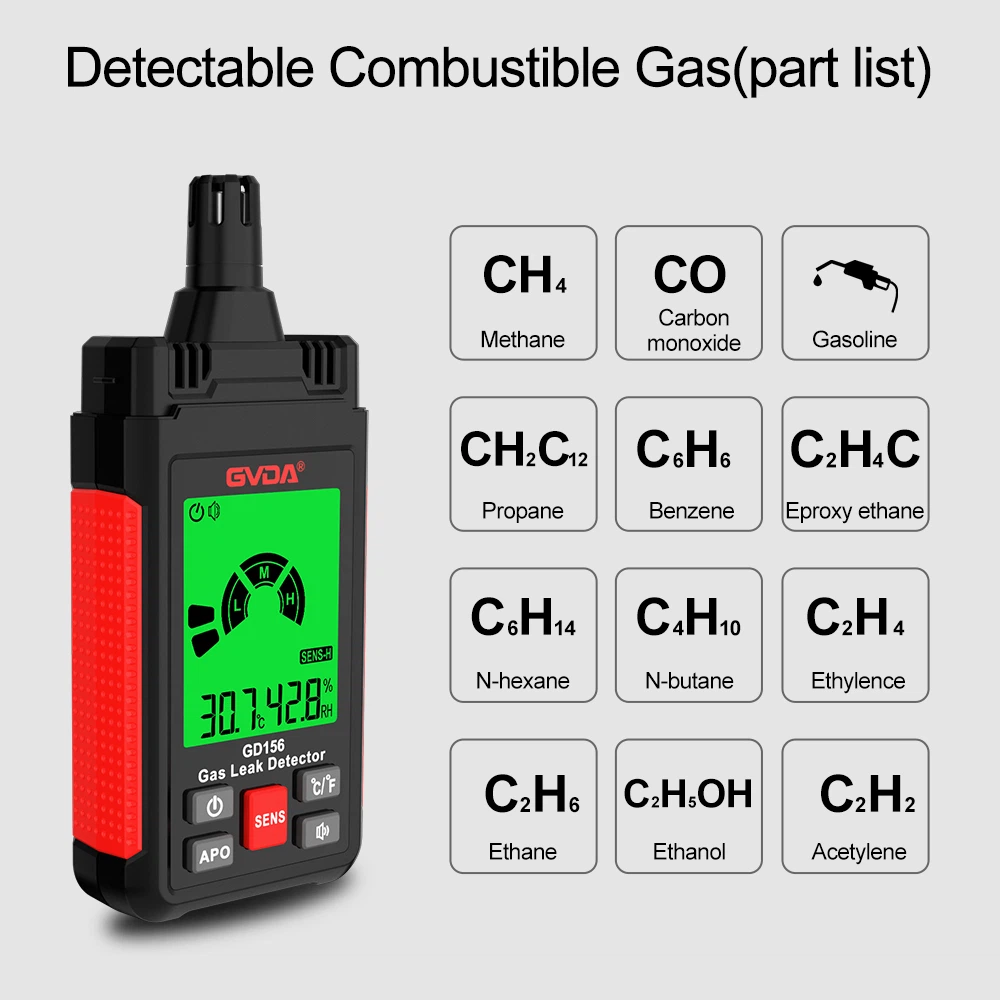
Operation and Maintenance Methods of Gas Detectors
Gas detectors only require regular testing and maintenance after a period of use. Only by mastering the correct testing and maintenance methods can the lifespan of the instrument be guaranteed to be longer.
1. In principle, standard sample gases that match the metrological certification and testing gases should be used. The same selection of standard sample gases requires different measurement media and different stations.
2. Before inspection, the surrounding environment should be free of flammable materials. If a combustible gas detector is used, the valve cover needs to be removed, filled with a certain amount of clean air, and continuous sample gas needs to be transported through a pipeline to ensure calibration accuracy.
3. When measuring mixed hydrocarbon gases, isobutane is the first sampled gas, followed by propane.
4. For non hydrocarbon mixtures or gases with lower explosive limit concentrations of heat generated during combustion of hydrocarbon mixtures, if necessary, easy and stable single component fuels such as butane, isobutane, propane, etc. can be used as sample gases. At this point, it is necessary to adjust the range based on a certain detection alarm signal conversion relationship. There are various combustible gas alarms and models available for use and maintenance, but the basic circuit principles are the same. Therefore, the usage and maintenance methods are similar.
Now, the usage and maintenance methods are introduced as follows:
1. The service life of detection and compensation components is usually 3-5 years. Proper usage and maintenance under certain conditions can prolong its service life.
2. The test button should be pressed once a week to check if the alarm system is functioning properly. The zero sum range of calibration alarms should be checked every two months.
3. Regularly check if there are any accidents in the detector entering the water. The ventilation cover of the detector should be removed and cleaned during instrument testing to prevent blockage.
4. The detector shall not be used for fire and explosion prevention devices beyond the prescribed range. Do not use detectors as a substitute for sulfur. The detector should be used under conditions where the concentration of combustible gas is as low as possible below the lower explosive limit, otherwise it may burn out the elements.
5. Hot wire semiconductor detectors shall not be used under conditions of oxygen deficiency. Do not use a large number of combustible gas sensors.