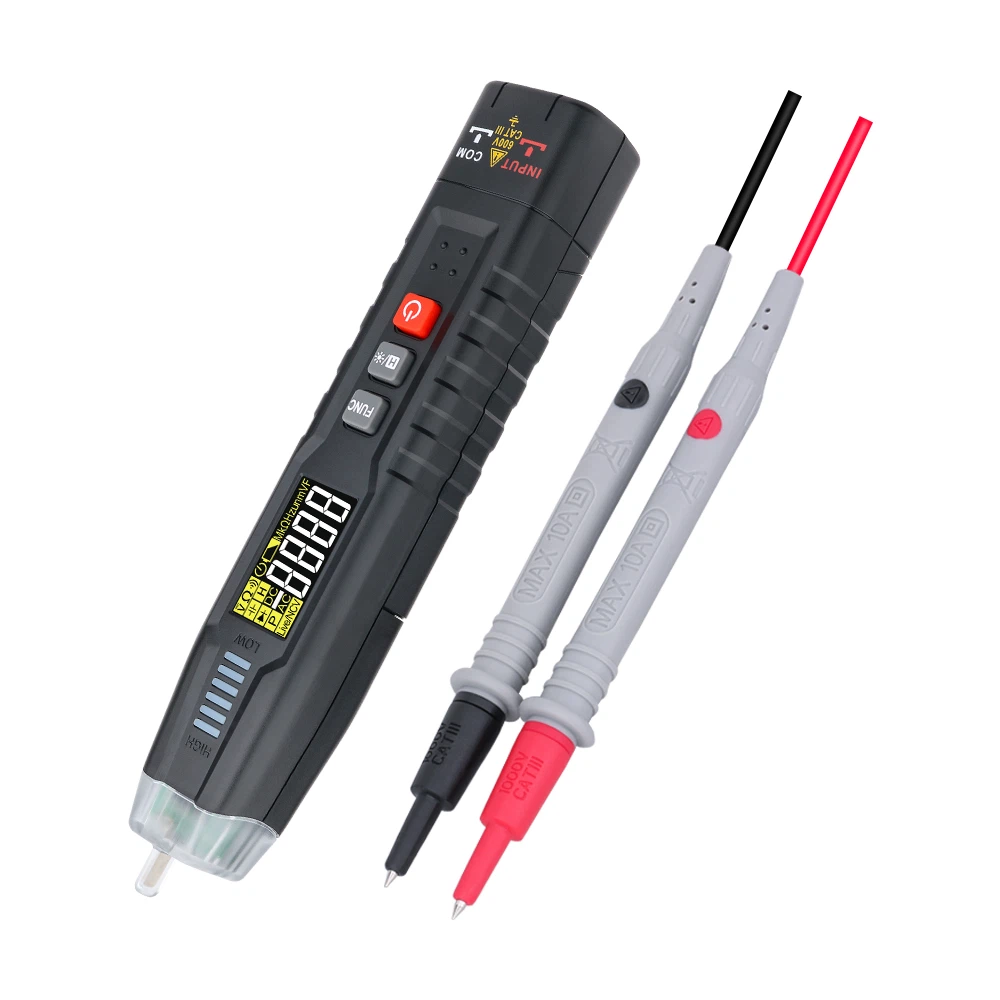
Peak Hold Function and Operating Procedures for Digital Multimeters
The so-called "peak holding" function refers to the digital ability to hold the currently measured peak value on the display screen; In other words, the final reading of the instrument is the maximum value in continuous measurement. This function is very useful. For example, sometimes it is necessary to detect the voltage at a certain point in a "danger zone" (such as densely packed solder joints, where a short circuit between adjacent pins can cause a new fault), and the "peak hold" function can come in handy. The specific detection method is as follows:
Place the digital multimeter in the "PH" state and ignore the instrument display for now. Simply focus on touching the probe securely and reliably with the test point, then release the probe and read calmly.
For some devices that have protection faults upon startup, if you need to know the voltage or current data of the machine at key points during the short startup period, you can use a digital meter placed in the "PH" state to monitor the voltage or current of the key points in advance. After the machine protection stops oscillating, you can read the maximum value during this period for analysis.
Instructions for use and maintenance
(1) When using a digital multimeter, the correct function and range should be selected first according to the technical specifications in the manual. When inspecting and repairing, the fault should be checked and repaired according to its symptoms. Firstly, it must be checked. Then, based on the revealed signs of malfunction, the display logic, monitor, and A/D converter can be checked separately.
(2) If one function is not functioning properly, such as inaccurate readings when measuring current, while the other functions are correct across all ranges. Obviously, the fault must have occurred in the current to voltage conversion circuit. This part also depends on the reference signal source, and it is necessary to check and troubleshoot the reference signal source.
(3) For the digital logic part, there is no need to perform any calibration, while for the analog part (especially in A/D converters, resistors, and AC to DC conversion circuits), calibration and adjustment should be performed after each component replacement.