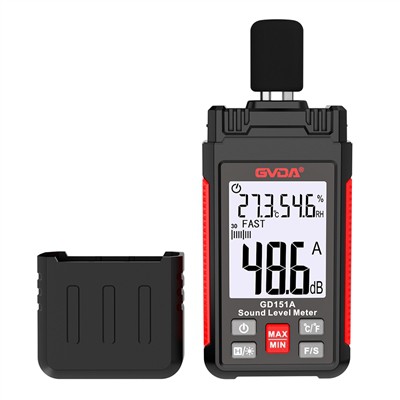
Specific operating steps of the noise meter
The correct use of a noise meter directly affects the accuracy of measurement results. Therefore, it is necessary to introduce the use of a noise meter.
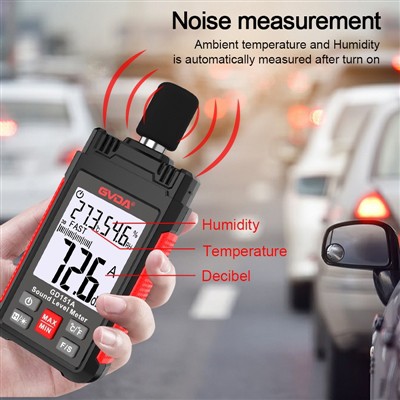
1. Selection of noise meter usage environment: Select representative testing locations, and the sound level meter should be kept away from the ground and walls to reduce the additional impact of reflected sound from the ground and walls.
2. The weather conditions require that during periods of no rain or snow, the noise meter should keep the microphone diaphragm clean. A wind cover must be added to prevent wind noise interference when the wind speed is above level three, and measurements should be stopped when the wind speed is above level five.
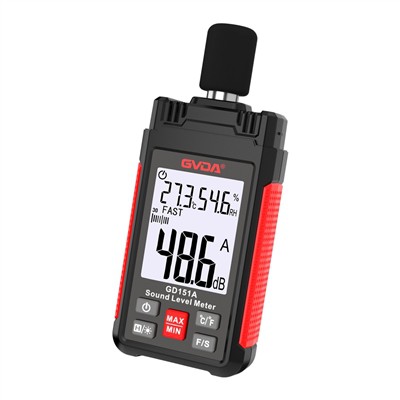
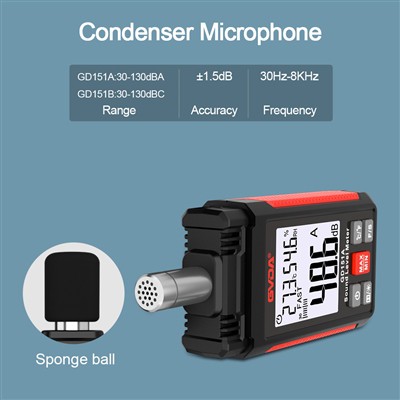
3. Open the noise meter carrying case, take out the noise meter, and put on the sensor.
4. Place the noise meter in measurement mode, check the battery, and then calibrate the noise meter.
5. Refer to the table (commonly used environmental sound level reference) and adjust the measurement range.
6. Below, various functions can be used for measurement, including fast (measuring instantaneous values in environments with large changes in sound pressure levels), slow (measuring average values in environments with small changes in sound pressure levels), pulse (measuring pulse sound sources), and filter (measuring sound levels in specified frequency bands).
7. Record data as needed, and also connect to a printer or other computer terminal for automatic collection. Organize equipment and return it to the designated location.
What are the factors that affect the noise meter?
1. From the perspective of measuring objects, it can be divided into the measurement of environmental noise (sound field) characteristics and the measurement of sound source characteristics.
2. According to the temporal characteristics of the sound source or field, it can be divided into steady-state noise measurement and non-stationary noise measurement. Unsteady noise can be divided into periodic variation noise, irregular variation noise, and pulse sound.
3. According to the frequency characteristics of the sound source or field, it can be divided into broadband noise, narrowband noise, and noise containing prominent pure tone components.
4. According to the required accuracy of measurement, it can be divided into precision measurement, engineering measurement, and noise survey.