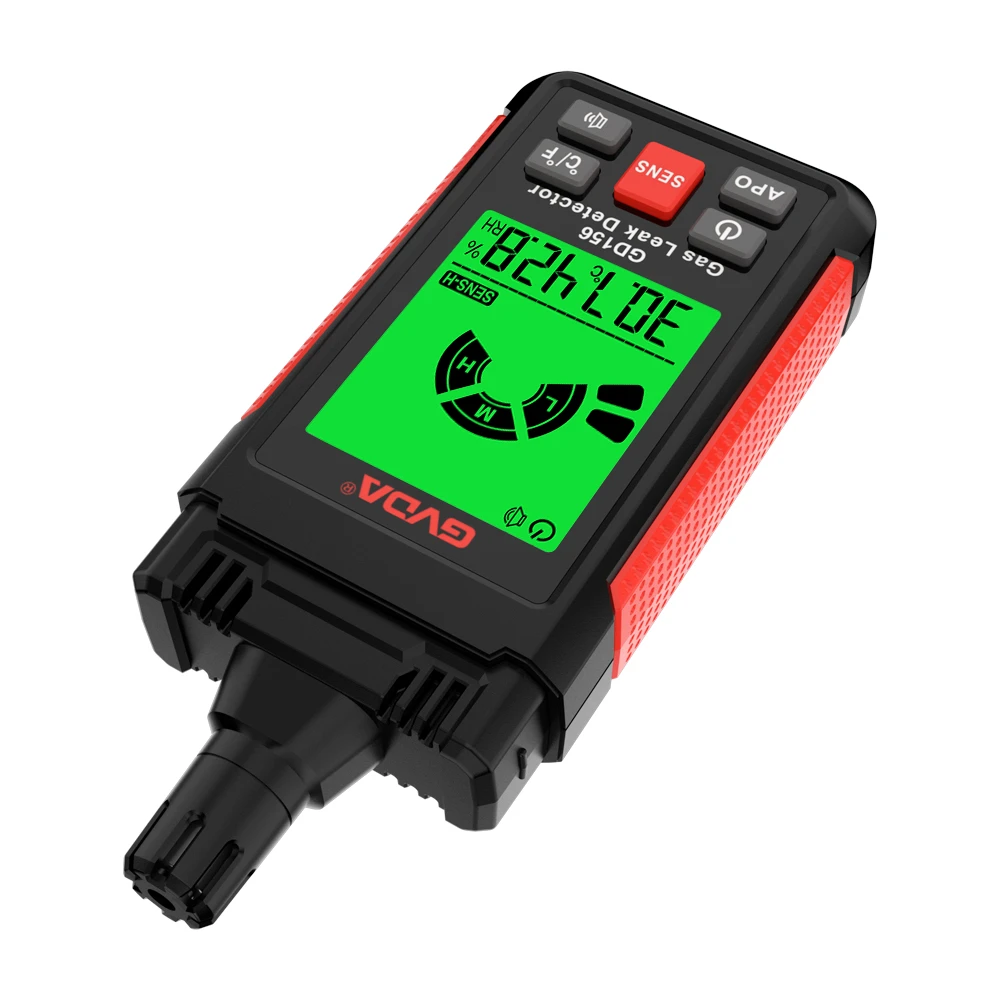
Usage and Maintenance Methods of Combustible Gas Alarms
There are many types and models of combustible gas alarms, but their basic circuit principles are the same, so their usage and maintenance methods are also quite similar. The methods of use and maintenance are introduced as follows:
(1) The service life of detection and compensation components is usually 3 years. Under reasonable usage conditions and proper maintenance, its service life can be extended.
(2) For alarm devices with a test button, the test button should be pressed once a week to check if the alarm system is functioning properly. The zero point and range of the alarm should be checked and calibrated every two months.
(3) The detector should be checked regularly for accidental water ingress. The breathable cover of the detector should be removed and cleaned during instrument testing to prevent blockage.
(4) The detector is an explosion-proof device and must not be used beyond the specified range. The detector shall not be used in sulfur-containing environments. The detector should be used as much as possible under conditions where the concentration of combustible gas is below the lower explosive limit, otherwise it may burn out the components.
(5) Hot wire semiconductor detectors shall not be used under hypoxic conditions. Do not use a large number of combustible gas direct injection probes.
Calibration of Combustible Gas Alarm Devices
(1) In principle, standard sample gases that have been certified by metrology and match the gas being tested should be used. The alarm points vary depending on the standard sample gas selected for the same tested medium.
(2) Before verification, the surrounding environment of the probe should be free of flammable gases. If there is combustible gas, the rain cover should be removed first, and a certain amount of clean air should be filled before continuously introducing the sample gas to ensure the accuracy of the verification.
(3) When the tested gas is a mixture of hydrocarbons, isobutane is the preferred sample gas, followed by propane.
(4) For non hydrocarbon mixtures or gases with lower explosive limits, the heat generated during combustion varies significantly
When necessary, hydrocarbon mixtures can use readily available and stable single component fuels such as butane, isobutane, propane, etc. as sample gases. Adjust the range of the alarm based on the conversion relationship of the detection signal.