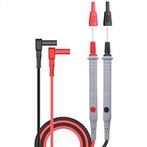
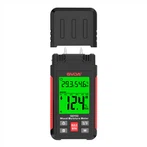
What are the reasons why the multimeter only shows 107V when measuring a 220V voltage?
In case of this situation, the power should be cut off to thoroughly check the reasons. You can measure the voltage at other people's homes to see if it is normal. Normally, it should be around 200V to 240V. During the peak period of summer irrigation in rural areas, it can drop to around 160V. This is due to the power supply system. If the voltage measured at other people's homes is normal but it is abnormal in your own home or for one of the circuits, there is a fault, and the power should not be restored until the fault is eliminated. This is to prevent accidents such as fires and damage to electrical appliances. Focus on carefully checking for reasons such as poor contact, electrical faults, overloading due to thin wires under heavy electrical loads, etc. It is best to ask an electrician to help eliminate the fault to prevent the fault from expanding and causing harm to people and property.
Firstly, it may be that the neutral wire of the external line is broken. Secondly, you can use an electric test pen to judge by observing the brightness. Thirdly, the internal battery of the multimeter may be insufficient, and you can compare it with another multimeter!
First, is it the case that the same multimeter measures the initial end voltage of the A single-phase line of the same main power source as 220V, but measures the initial end voltage of the B single-phase line as 107V? Second, is it that the same multimeter measures the voltage at the initial end of the A single-phase line as 220V, but measures the voltage at the terminal end as 107V?
If the same multimeter measures the initial end voltage of the A single-phase line of the same main power source as 220V, but measures the voltage of the B single-phase line as 107V; then there should be poor contact due to oxidation at the two wiring points of the upper and lower ends of the circuit breaker (switch) of the B single-phase line, resulting in an increase in contact resistance and causing a voltage drop.
If the same multimeter measures the initial end voltage of the A single-phase line or the B single-phase line of the same power source as 220V, but measures the terminal end voltage as 107V; then it should be that the line with the measured terminal end voltage of 107V is too long or the load current on the line is greater than the safe current-carrying capacity of the line wire, resulting in a voltage drop.
If the initial end voltages of the A and B single-phase lines of the same power source are measured as 107V; then it should be that the capacity of the distribution transformer in this low-voltage distribution area is much smaller than the power consumption capacity of the users, or the distribution line from the distribution transformer to the user is too long and the wire diameter is too small, leading to a voltage drop.