Application range of digital thermometer
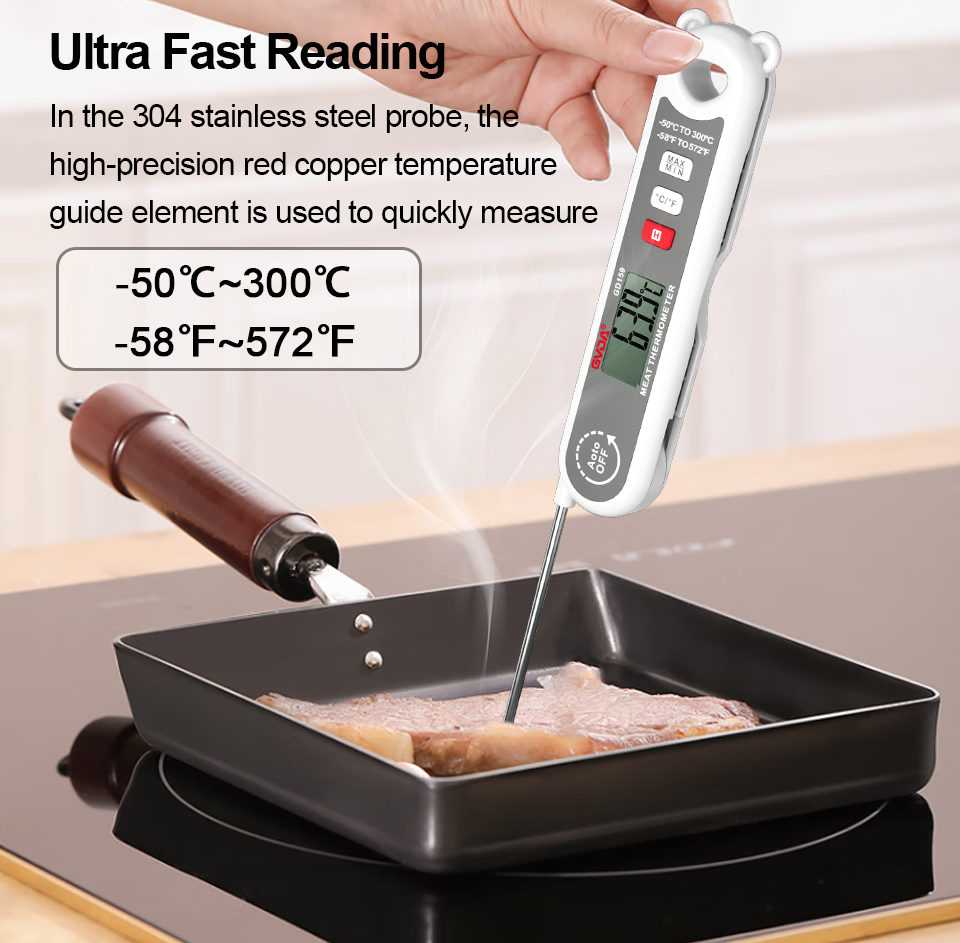
The digital thermometer is assembled with imported chips with high precision and high stability, and the error is less than or equal to 0.5%. It has internal power supply, micro power consumption, and stainless steel shell, which is solid in protection and beautiful in appearance.
The digital thermometer adopts imported high-precision, low-temperature drift, ultra-low power consumption integrated circuits and wide-temperature liquid crystal display, and the built-in high-energy battery can work continuously for ≥5 years without laying power cables. The new on-site temperature display instrument. It is an ideal substitute product for traditional on-site pointer bimetallic thermometers, and is widely used in various industrial and mining enterprises, colleges and universities, and scientific research institutes.
Temperature is a physical quantity that we are exposed to in real time in our daily production and life, but it is invisible, and we can only feel the approximate temperature value only by feeling. Although the traditional pointer thermometer can indicate the temperature, its accuracy is low. The use is not convenient enough, and the display is not intuitive enough. The appearance of digital thermometers allows people to intuitively understand the temperature they want to know.
Digital thermometers use temperature sensitive elements, that is, temperature sensors (such as platinum resistance, thermocouples, semiconductors, thermistors, etc.), to convert changes in temperature into changes in electrical signals, such as changes in voltage and current, temperature changes and electrical signals. The change has a certain relationship, such as a linear relationship, a certain curve relationship, etc. This electrical signal can be converted into a digital signal by using an analog-to-digital conversion circuit, that is, an AD conversion circuit, and the digital signal is then sent to a processing unit, such as a single-chip microcomputer or a PC. etc., the processing unit connects this digital signal with the temperature through internal software calculation, and becomes a temperature value that can be displayed, such as 25.0 degrees Celsius, and then displays it through a display unit, such as LED, LCD or computer screen, etc. for people to observe. In this way, the basic temperature measurement function of the digital thermometer is completed.
Depending on the sensor used, the AD conversion circuit, and the processing unit of the digital thermometer, its accuracy, stability, temperature measurement range, etc. are all different, so it is necessary to choose a digital thermometer that meets the specifications according to the actual situation.
Digital thermometers are hand-held, plate-mounted, and small-sized for medical use.