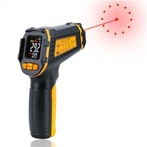
Clamp-on ammeter to check leakage and theft of electricity
Determine whether the residual current action protector itself is faulty
At the distribution transformer, disconnect the fuse on the phase line on the outgoing side of the AC contactor controlling the low-voltage line, and if the residual current action protector can be put into operation normally at this time, it proves that the residual current action protector is good. Otherwise, the residual current action protector should be overhauled and replaced.
Check to determine which phase of the phase line leakage
In the distribution transformer, the control of low-voltage line AC contactor outlet side neutral disconnect, and then has removed the fuse core installed in one of the phases, with a clamp ammeter to measure the phase, the measured current is the leakage current of the phase. In order to prevent the existence of phase grounding on the line (e.g., some people use a line of a ground method of electricity theft, etc.) to produce large current damage to the instrument, the detection of the first clamp-on ammeter block on the large current block; if the detection value is very small, and then the clamp-on ammeter block converted to milliampere block detection.
Determine the existence of a leakage of the phase line, determine the location of the leakage of electricity
At the distribution transformer, the phase line to be checked is inserted into the fuse core, the neutral line and the remaining two-phase fuse is disconnected, and the pole is climbed to use the clamp-on ammeter to detect the energized phase line to determine the location of the leakage. In the case of low-voltage line power supply, you can also suspect the scope of low-voltage users connected to the household line with a clamp-on ammeter detection. Detection, single-phase users of the phase line and the neutral line should be placed in the jaws of the clamp-on ammeter at the same time, three-phase users of the three phase line and the neutral line should also be put into the jaws at the same time. If there is no leakage fault, the clamp ammeter indicates zero, otherwise not zero.
Check the user's internal lines and equipment for leakage
In the user's power supply into the house line with a clamp ammeter to measure leakage current, while the user's power equipment, lamps and lanterns are put into exit one by one, by looking at the clamp ammeter to detect changes in leakage current to find leakage equipment. If all the equipment is good, or the existence of leakage equipment have been withdrawn, but the clamp-on ammeter shows that the user still exists leakage current, it may be that the user's low-voltage line leakage, should be dealt with on a case-by-case basis.
Problems to note
1, in the search for leakage faults, the control of low-voltage lines of the AC contactor needs to be forced to send power for a short period of time.
2, find leakage faults should pay attention to safety, must be supervised, and do a good job of safety measures. When reading the clamp-on ammeter data, be sure to maintain a safe distance between the human body and the charged parts.
3, high harmonics on a few residual current action protector has interference phenomenon, may make it happen false action. If there are large harmonic source users such as medium frequency furnace in the area, such users should be withdrawn from operation during the detection.
4, this method is particularly effective in finding "one line, one place" power theft, characterized by clamp-on ammeter leakage current is large, up to several hundred milliamps up to several amperes. Unknown power theft households can be found according to the above methods, such suspected power theft can be directly to the household line with a clamp-on ammeter check.