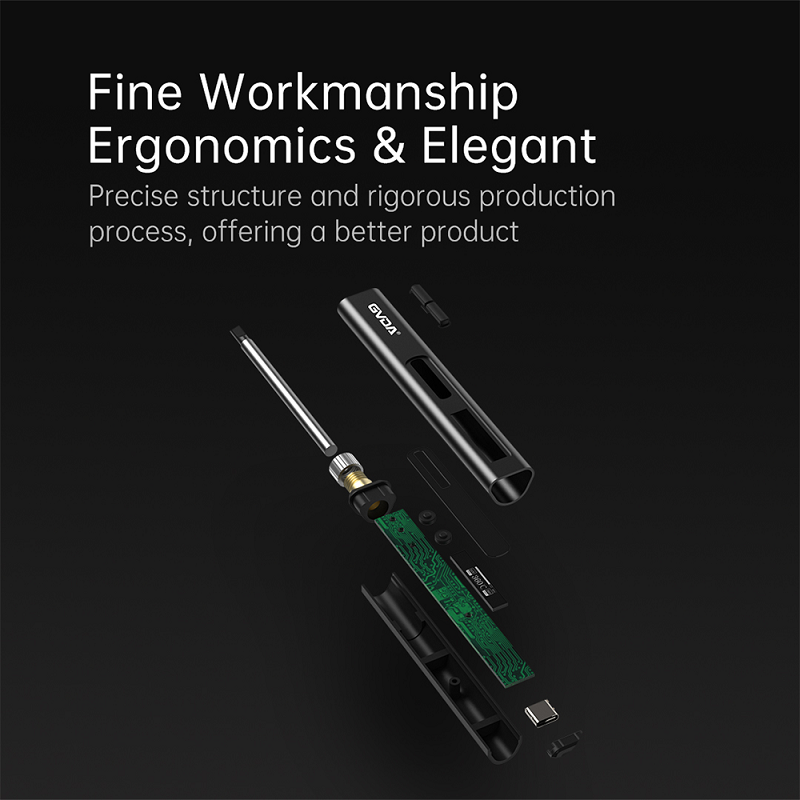
Common sense and standards for using electric soldering irons
1: Understand electric soldering iron, which is the most commonly used tool in welding.
1. Function: It converts electrical energy into thermal energy to heat and weld the welding points. The success of welding largely depends on how well it is handled. Generally speaking, the higher the power and heat of an electric soldering iron, the higher the temperature of the soldering iron head.
2. The commonly used power of electric soldering irons is 20W; 25W; 30W; 40W; 60W; 100W
3. Heating form of electric soldering iron: internal heating; Externally heated.
4. Common auxiliary articles of soldering iron: soldering iron frame, tin suction device, tweezers, electrostatic bracelet, Diagonal pliers, absorbent sponge.
2: Precautions for using electric soldering irons
1. Preparation before use of soldering iron.
The electric soldering iron shall be coated with tin before use. The specific method is to heat the electric soldering iron. When the soldering tin can be melted just now, the tin wire shall be evenly coated on the soldering iron head so that the soldering iron head can eat a layer of tin evenly. (Note: It is a normal reaction for newly purchased soldering irons to smoke during the heating process)
2. Master the correct operating posture.
It can ensure the physical and mental health of the operator and reduce labor injuries. In order to reduce the harm of chemicals emitted by welding flux during heating and reduce the inhalation of harmful gases, the distance from the soldering iron to the nose should generally not be less than 20cm, and 30cm is usually recommended.
3. Before using an electric soldering iron, check whether the voltage used matches the nominal voltage of the soldering iron.
4. The electric soldering iron should be grounded and well grounded.
5. When using soldering iron, it is necessary to wear an electrostatic bracelet, and the electrostatic bracelet should be well grounded. (Note: The static grounding wire and soldering iron grounding wire must be separated)
6. After the electric soldering iron is powered on, it cannot be knocked, disassembled, or installed with any electric heating parts.
7. Electric soldering irons should be kept dry and should not be used in excessively humid or rainy environments.
When disassembling the soldering iron head, turn off the power supply.
After turning off the power, use the remaining heat to apply a layer of tin on the soldering iron head to protect it.
When there is a black oxide layer on the soldering iron head, the oxide can be wiped off on a water absorbing sponge and immediately tinned. (cannot be scraped with a knife)
11. Sponges are used to collect tin slag, tin beads, and oxides. It is advisable to pinch them with your hands just enough to prevent water from flowing out.
12. Electric soldering irons should not be powered on for a long time without use, as this can easily cause the soldering iron core to accelerate oxidation and burn off, shorten its lifespan, and also cause the soldering iron head to oxidize due to prolonged heating, even being "burned" and no longer "eating tin"
3: Solder
Solder is a type of fusible metal that can connect component leads to the connection points of printed circuit boards. Tin (Sn) is a soft and ductile silver white metal with a melting point of 232 ℃. It has stable chemical properties at room temperature, is not easily oxidized, does not lose its metallic luster, and has strong resistance to atmospheric corrosion. Lead (Pb) is a relatively soft light blue white metal with a melting point of 327 ℃. High purity lead has strong atmospheric corrosion resistance and good chemical stability, but it is harmful to human health. Adding a certain proportion of lead and a small amount of other metals to tin can make it with low melting point, good fluidity, strong adhesion to components and wires, high mechanical strength, and good conductivity