Explain the various functions and precautions of a multimeter in detail
Before introducing the multimeter in detail, let's first explain the common sense and reading conventions of general measuring instruments and meters.
The instruments are divided into pointer type (analog type), digital display type (digital), and wave form (graphic) to display the measurement results.
Measure the electrical parameters of different categories, use corresponding instruments, and select the corresponding functional gear. If measuring length with a ruler, different types and accuracies of rulers may be used for different things, and our measurements of electricity and parameters are also the same.
Some instruments may need to be preheated, debugged, and zeroed before formal use to put them into normal working conditions. Then estimate the size of the measured component parameters and electrical parameter values, and select an appropriate range to improve measurement accuracy. If unsure, a large number of range tests are generally used first to ensure the safety of the instrument.
The selection of measuring range is generally accurate when the pointer is at 1/3-2/3 of the full range or when the number is close to the gear value, and the graphics should be fully displayed and as large and clear as possible.
During the measurement process, it is sometimes necessary to adjust the display method, level, magnification, and other functions of the knob or switch to facilitate observation and result display. At this time, the HOLD key can lock the measurement results or store the data.
Pointer type instrument reading, check the selected functional gear and range, as well as the position of the dial indicated by the pointer.
The function block is used to determine the measurement category and unit, while the range is used to determine the unit and reading. For the dial, it is necessary to know which one to look at, usually the corresponding function or the most accurate one, while also checking the pointer deflection position reading.
There are four types of reading relationships, namely addition, subtraction, multiplication, and division.
Addition and subtraction are the most representative in the level meter. If the+3dB and+10dB gears or buttons are selected, and the pointer is at+6dB, the measurement result is+19dB. If the pointer is at -5dB, the measurement result is+8dB.
Multiply the resistance reading in the ohmic gear, and if the RX100 gear is selected and the pointer is at the 20 position, then multiplying 20 by 100 is 2K Ω, and this resistance is 2K Ω. There is also an oscilloscope to measure the signal amplitude, such as selecting an amplitude level of 1mV, with a total of 5 grids from the waveform vertex to the valley point, and using 1X 5 equals 5mV. The amplitude of this signal is 5mV.
In addition to relationships such as the voltage and current test ranges of a pointer multimeter, which range you choose represents the magnitude of the full scale range value, while the pointer deflection position represents the proportion of the measurement. If using a DC voltage range of 50V and the pointer at the 26 scale, it means that the 50V is divided into 5 large parts and each part is further divided into 10 small parts, which means a total of 50 parts, accounting for 26 of them. The measurement result is 26V.
For logarithmic explicit instruments, direct reading is sufficient, and the unit is determined based on the selected range. Some automatic range instruments also display the unit.
Knowledge related to multimeter
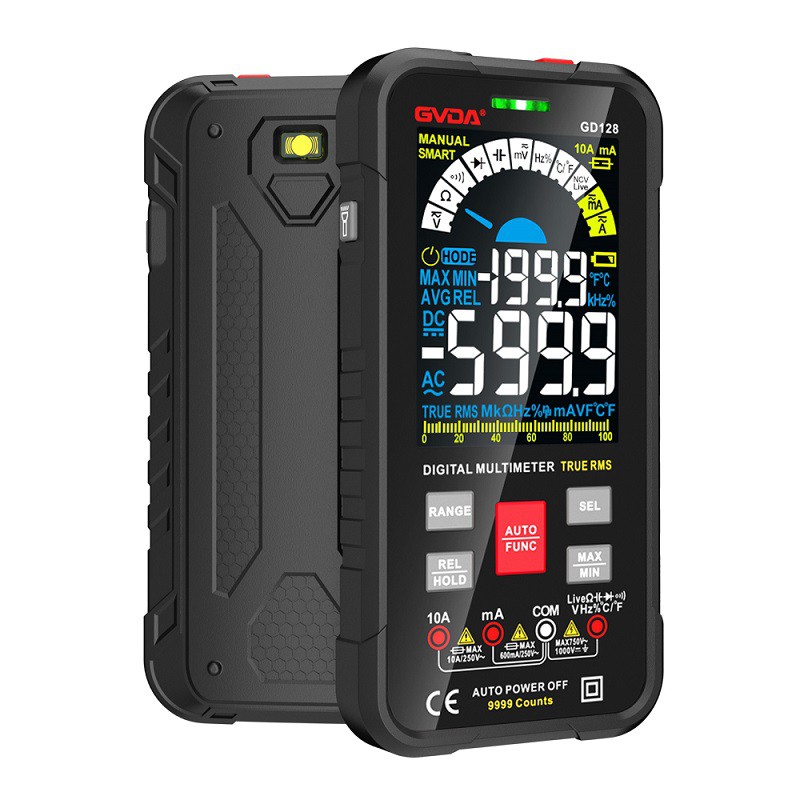
Multimeters can be divided into two categories based on measurement principles and display methods: pointer type and digital type. The main differences between the two are as follows.
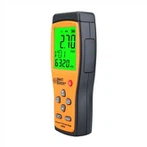
A digital multimeter has higher measurement, reading accuracy, and sensitivity than a pointer multimeter, with a larger internal resistance. When measuring voltage, the digital multimeter is closer to the ideal measurement conditions. At the same time, digital multimeter has more measurement functions, such as measuring capacitance, temperature, frequency, etc.
When measuring dynamic processes with a digital multimeter, the digital jump cannot reflect the dynamic change process well. The pointer type multimeter can well reflect the continuous change process and trend of quantity, and observe the dynamic process more intuitively.
When measuring DC voltage or current, if the polarity of the pointer multimeter is reversed, the pointer will deflect in the opposite direction, and the digital can automatically recognize and display the polarity. If it is a negative number, a "-" sign will be displayed before the negative number.
When using a pointer type multimeter, if the voltage and current are measured beyond the range, the pointer will tilt to the extreme position to the right, which can easily damage the meter head or reduce accuracy. The digital multimeter displays 1, indicating that it is out of range, and the same applies when measuring resistance.
According to the readings of pointer and dial, pointer multimeter is prone to Personal equation, while digital multimeter eliminates Personal equation. However, digital multimeter is vulnerable to interference, and the number jumps, which brings trouble to identify the digital value. Generally, the middle value is taken, and in some cases, the minimum or maximum value is taken.
Considering the advantages of both pointer type and digital multimeter, it is recommended to match the two types of meters together. Overall, digital multimeter is much better and has more comprehensive functions, making it the preferred choice.