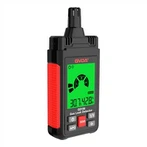
How to use a multimeter to check for short circuits and leakage faults in your home
Multimeter checking for short circuits
To check whether there is a short circuit in the line, first cut off the circuit breaker, and then turn off all the switches in the line, and turn off all the equipments (unplug the equipments that can be unplugged, all unplugged).
Multimeter select "beeping gear", in the circuit breaker under the mouth for measurement - two pens, respectively, contact the circuit breaker under the mouth of the zero line and the fire line. If the multimeter beeps, proving that there is a short circuit in the line; otherwise, there is no short circuit.
Multimeter check broken circuit
Still cut off all the switches, the multimeter select "beeping gear". Determine the direction of the line to be measured, find the two ends of the wire.
Measurement, the two pens of the multimeter were contacted at both ends of the wire, if the beeping sound can be issued, it proves that the wire is not broken; if there is no beeping sound, it proves that there is a break in the wire.
What if the distance between the two ends of the wire is too far? Find a wire that is confirmed to be intact and strip the ends of the wire. One end of the wire is connected to the multimeter, and the other end is used as a meter pen to contact the line to be tested - this is the use of wire to extend the length of the multimeter pen, this approach will be often used in practice.
Multimeter check leakage
Do not cut off the circuit breaker this time, just turn off all the switches in the line, pull out all the plugs. Multimeter select "750V ~ gear", in the circuit terminal measurement (in the socket, switch and other locations to measure, do not measure in the distribution box).
Measurement Measure the voltage between fire wire and zero wire, and fire wire and ground wire. If the two measurements have the same value, or the first value is less than the second, it proves that there is no leakage in the line.
If the first measurement is greater than the second, it proves that there is leakage in the line - the greater the difference between the two, the more serious the leakage.