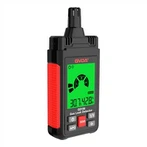
How to use a multimeter to measure the leakage fault of a line or equipment
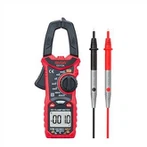
As an indispensable measuring instrument for electricians, the multimeter can measure many physical quantities such as voltage, current, resistance, and capacitance. Therefore, the multimeter plays a very important role in measuring lines and repairing circuits. How to use a multimeter to measure the leakage fault of a line or equipment.
What is leakage
Leakage is because the insulation layer of the wire is damaged and there is an electrical connection between the electrical shell equipment, which causes the current in the wire to "leak" out. For example, the shell of the motor may be in contact with any phase of the three-phase electricity. Leakage is caused; there is an electrical connection between the shell of the household appliance and the live wire in the mains for some reason, so that there is a certain potential difference between the metal shell of the household appliance and the live wire. This phenomenon also becomes leakage . The occurrence of leakage will cause relatively great danger, and it is very easy to cause electric shock accidents for operators of the machine. In this respect, we often use leakage protectors to protect the circuit.
What gear should the multimeter use to measure leakage
How to check when the leakage accident occurs? This is a problem that many friends are concerned about. Let me talk about my views on this problem. For such a problem, the first thing we think of is to use a multimeter to detect whether there is a leakage fault in the electrical equipment. I think the detection method is nothing more than There are two kinds, one is the resistance method; the other is the voltage method.
Detection of Leakage Fault by Resistance Method
When the resistance method is used to detect leakage faults, first disconnect the power supply of the electrical equipment. We can use the RX10K gear of the pointer multimeter. If it is a digital multimeter, it can be set on the 200M gear. Use a pen of the multimeter to touch the circuit of the live wire (phase wire). Then use another test lead to touch the metal shell of the device. Under normal circumstances, the pointer of the multimeter should display an infinite resistance value. If the pointer is deflected at this time, it means that the insulation strength between the metal shell of the electrical device and the power supply is not enough. It's just a leak.