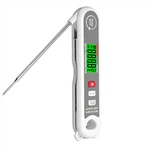
Luxmeters are of great significance to people in life
Illumination is closely related to people's lives. Sufficient light can prevent people from accidents. Conversely, too dark light can cause human fatigue far more than the eyes themselves. Uncomfortable or poor lighting conditions are therefore one of the leading causes of accidents and fatigue. Existing statistics show that about 30% of all occupational labor accidents are directly or indirectly caused by insufficient light. The lighting requirements for stadiums (stadiums) are very strict, too strong or too dark light will affect the effect of the game.
So, what are the hygienic requirements for the indoor contrast illumination where people live? Illuminance is a very important indicator in hygiene. Light refers to the electromagnetic radiation that can cause the human eye to feel bright. When the light enters the eye, the perception that can be produced is called vision. The light that people see refers to visible light, and its wavelength range is between 380 and 760nm (nanometers).
Lighting can be divided into two categories: natural lighting and artificial light sources. Natural lighting refers to the natural illuminance of indoor and regional areas, including direct sunlight scattered light and reflected light from surrounding objects, and is often expressed by daylighting coefficient and natural illuminance. The daylighting factor refers to the ratio of the effective area of the daylight opening to the indoor floor area. The daylight factor of a general residence is between 1/5 and 1/15, and the living area ratio is between 1/8 and 1/10 (window area/indoor floor area). The natural illuminance coefficient is used to evaluate the illuminance level of natural light. It reflects the relationship between indoor and outdoor light exposure. It also reflects the local light climate (the sum of the natural light energy and the sunlight illuminance index of the climate).
In order to ensure that people live under suitable light, our country has formulated health standards for indoor (including public places) illumination. For example, the sanitary standard of illuminance in shopping malls (stores) in public places is ≥100Lx; the sanitary standard of illuminance on countertops in libraries, museums, art galleries, and exhibition halls is ≥100Lx; the sanitary standard of illuminance in public bathrooms is ≥50Lx; bathrooms (showers, pools, bathtubs)≥ 30Lx, sauna ≥ 30Lx. Foreign standards for indoor illuminance, such as Germany recommends several rated light intensity, the office includes 300Lx for clerical work, 750Lx for typing and drawing work; the illuminance requirements for visual work on the factory and production line are 1000Lx; 200Lx for hotels and public rooms; 200Lx for reception points and cashiers; 1500-2000Lx for shop windows; 150-200Lx for hospital wards, 500Lx for emergency treatment areas; 400-700Lx for schools and classrooms; canteens and indoor gyms For 300Lx etc.
For the measurement method of illuminance, it is generally measured with an illuminance meter. The illuminance meter can measure the intensity of different wavelengths (such as the measurement of visible light band and ultraviolet band), and can provide people with accurate measurement results.
In short, illumination and human health, especially eye care, have extremely important hygienic significance.