Maintenance methods for frequency converter switching power supply
1. Detect whether the rectifier circuit D1-D4 is broken or the capacitor of the open circuit filter circuit is damaged, whether the balance resistors R1 and R2 are normal, and whether the step-down resistor R3 is burned or the resistance value increases and fails (test under power outage).
2. Inspect the b-e and c-e junctions of the switch tube for breakdown and short circuits, and measure whether each winding of the switch transformer has short circuits to determine the quality of the switch tube and switch transformer (test under power outage).
3. Detect the rectification and filtering components of the secondary output winding, and focus on checking whether the filtering capacitor is bulging or damaged to eliminate the possibility of a short circuit in the secondary circuit.
4. Check if the absorption circuits D5, R11, and C9 are normal (test under power outage).
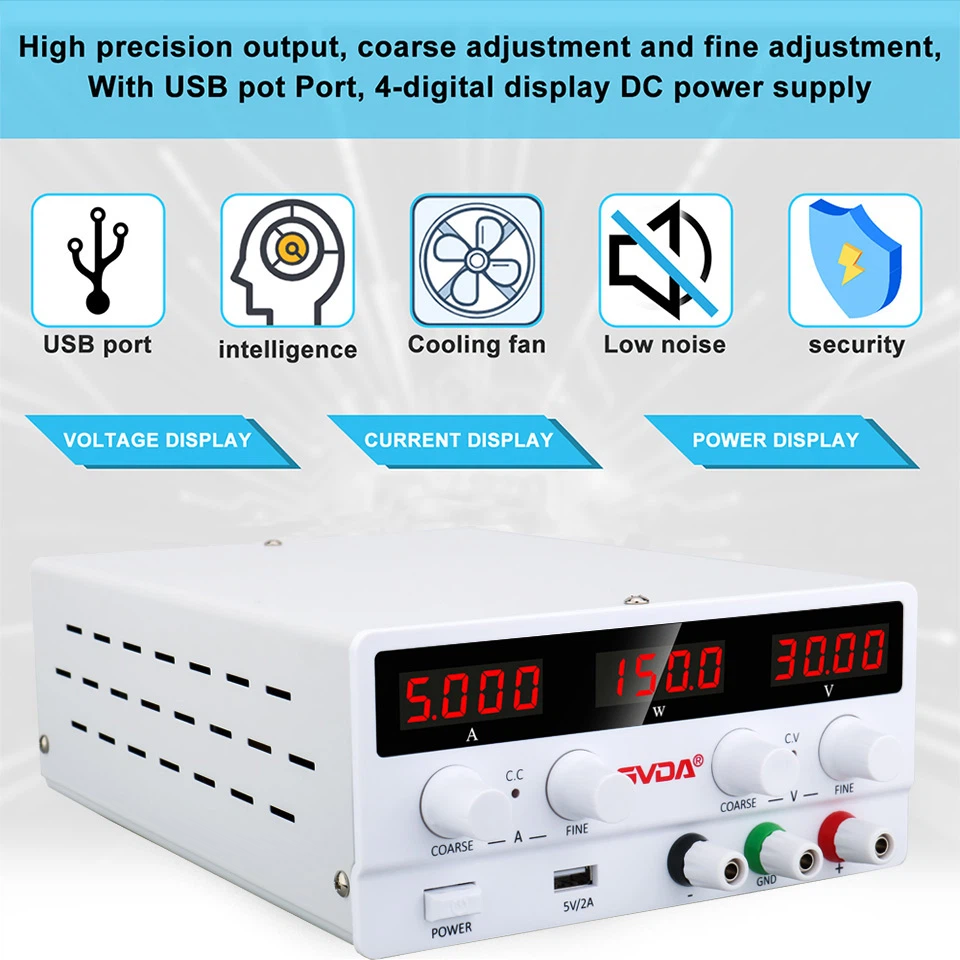
5. After confirming that the above components are normal, we can remove the switch power supply board from the frequency converter and conduct a separate power-on test on it. Slowly adjust the voltage regulator to the rated voltage of the switching power supply. At this time, you should be able to hear the squeaking sound when the transformer starts vibrating. If you do not hear the vibration sound, use a multimeter to check whether there is a DC voltage of around 12V-16V between the positive and negative stages of the UC3844 power supply.
6. After confirming that the voltage at the power supply end of UC3844 is normal, an oscilloscope can be used to check whether there is a PWM wave output from pin 6 of UC3844 to the trigger end of the switch tube (depending on the circuit design, the frequency of the PWM wave is generally between 20KHZ and 100KHZ).
7. If there is no PWM wave output, replace timing components C5, R8, C6, or UC3844. After troubleshooting the above steps, the switching power supply should be able to function normally. In frequency converters, there are many types of switching power supplies, but the basic principles are the same. For example, each PWM management chip has a power supply terminal, a timing component RC network, and a port for outputting PWM waves. As long as we understand their working principles and follow certain methods and steps, we can eliminate faults.