Measuring the Emissivity of Objects Using Infrared Thermometers
1. Definition of object emissivity
Emissivity refers to the ratio of the radiation ability of an object to the radiation ability of a black body at the same temperature, which is called the emissivity or blackness of the object, also known as the specific emissivity. This is for all wavelengths, so it should be called full emissivity, which is usually simply called emissivity. Emissivity in English refers to the physical properties of a single substance, which communicates with epsilon in the radiation heat transfer formula, and emittance refers to the emissivity of a certain sample. The emissivity of the actual object The surface material properties of the object are related to the surface state of the object (including the surface temperature of the object, the surface roughness, and the existence of surface oxide layer, surface impurities or coating).
The emissivity of metals increases with increasing surface temperature, while the emissivity of nonmetals generally decreases with increasing surface temperature. Metals are much less emissive than non-metals.
2. Test method of emissivity of infrared thermometer
The internationally recognized emissivity test method is mainly the American ASTM C1371 standard, and the technical requirements follow the ASTM C1371 procedure to use the emissivity tester to obtain the emissivity. The introduction of "Standard Test Method for Determination of Emissivity of Materials Near Room Temperature Using Portable Emissivity Meter" translates the American ASTM C1371 standard.
There is a very simple way: it is compared with a standard contact thermometer. The calculation formula is: emissivity = measured value/standard value. The measured value in the formula is the temperature measured by the infrared thermometer or the infrared thermal imager, and the standard value is the temperature measured by the contact thermometer. Due to any It is impossible for an object to have no reflection (black body) at all, so this correction factor is often less than 1.
The test method follows the following rules:
Method 1: Use the standard value temperature measured by a contact thermometer. At this time, the emissivity corresponding to the standard temperature of the formula is 1. The emissivity of the object can be obtained by measuring the temperature with the thermometer;
Method 2: The emissivity of object 1 is known, the temperature corresponding to object 1 is measured with a thermometer, and the temperature of object 2 is measured with a thermometer, then the emissivity of object 2 can be calculated.
The detailed test methods of method 1 and method 2 are as follows.
Instruments and items required for testing: infrared thermometer and contact thermometer
Test steps:
1. The measured object is in a constant temperature state;
2. Adjust the emissivity of the infrared thermometer to 1, and measure the actual temperature at the current point;
3. Use a standard contact thermometer to measure the standard value temperature at the current point;
4. Bring the two sets of data into the formula: emissivity = measured value/standard value to calculate the emissivity.
Instruments and items required for testing: Infrared thermometer and coating with known emissivity
Scope of application: Objects with low temperature
Test steps:
1. Paste a piece of paper or other sheet with known emissivity on the surface of the measured object or smear a paint substance with known emissivity on the surface of the measured object, the emissivity is;
2. When the temperature reaches an equilibrium state, use a thermometer to measure the temperature of the uncovered part and the covered part respectively.
3. Utilize the formula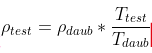 Find the emissivity of the measured object.
For high-temperature objects, in addition to the second method, a cavity can also be drilled on the surface of the measured object. The depth-to-aperture ratio of the cavity should be 6:1, and it can be considered that the emissivity of the cavity is similar to that of a black body.