2.1 Pulse laser ranging
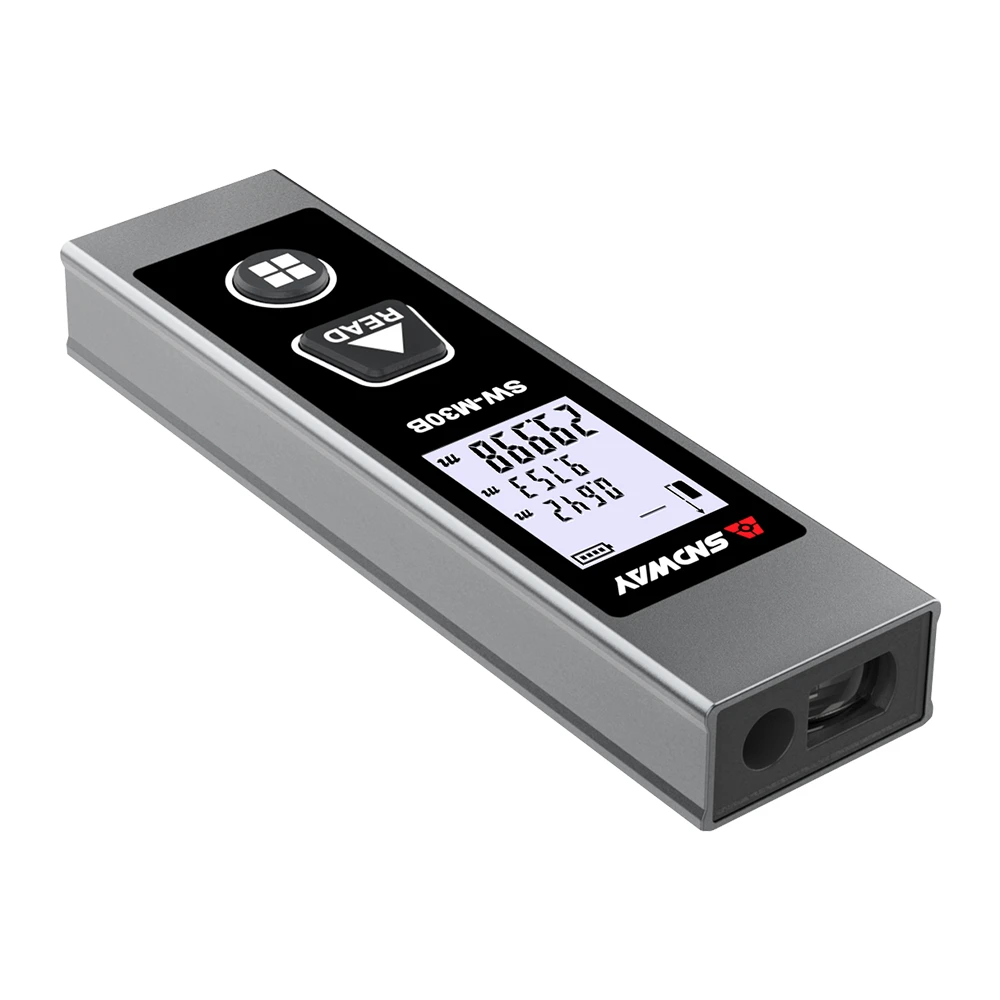
One of the early applications of laser technology was pulsed laser ranging. Due to the small divergence angle of the laser pulse and the very short duration of the emission, the energy is relatively concentrated in space and time, making the instantaneous power of the laser pulse very large. Therefore, in the case of cooperative targets, pulsed laser measurement can achieve a larger range. However, in most practical applications, because it is difficult to set up cooperative targets, pulsed laser ranging is generally measured by obtaining reflected signals from the diffuse reflection of the laser by the target to be measured. At present, pulsed laser ranging has been widely used in engineering survey, topographic survey, artificial earth satellite ranging and so on. The principle of pulsed laser ranging is to measure the time (flight time) that the laser takes back and forth on the distance to be measured, and then calculate the distance from the measured time through formula 2.1:
Where L is the distance to be measured, c is the speed of light, and t is the flight time of the laser. The system consists of a laser emitting system, a photoelectric receiving system, a gate control circuit, a counter, control and display circuits. The optical receiving system part should also add an interference filter and a small hole diaphragm, whose function is to reduce the influence of background light and stray light, and reduce the background noise of the detector output signal. When the control circuit sends a measurement start signal, the drive circuit generates a pulse signal, and the laser emits pulsed laser light (main wave). The main wave is sampled by a part of the mirror, and a small part of the energy is directly sent to the receiving system as a reference signal, which is converted into an electrical signal by the photodetector, and then turned on after amplification and shaping.