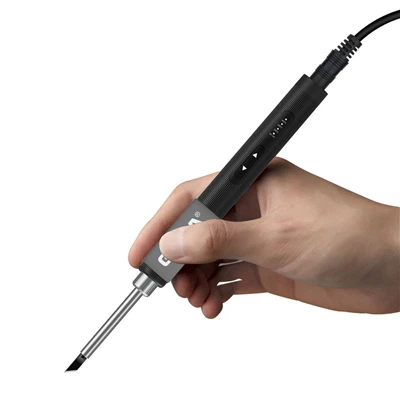
Specifications for the use of soldering iron - use and maintenance of soldering iron tip
Maintenance of soldering iron tip:
1. Wet the cleaning sponge with water before welding, and then squeeze out the excess water. Only in this way can the tip of the soldering iron get the best cleaning effect. If you use a non-moist cleaning sponge, it will damage the tip of the soldering iron and cause it to not tin.
2. When performing soldering work, the following soldering sequence can protect the soldering iron tip with solder and reduce the oxidation rate.
3. After soldering, adjust the temperature to about 250°C, then clean the tip of the soldering iron, and add a new layer of tin for protection. (If you use a non-temperature-controlled soldering iron, cut off the power first, and let the temperature of the soldering iron tip drop slightly before tinning.)
4. Precautions
a. Try to use low temperature soldering and high temperature will accelerate the oxidation of the soldering iron tip and reduce the life of the soldering iron tip. If the temperature of the soldering iron tip exceeds 470°C, it will oxidize twice as fast as 380°C.
b. Do not apply too much pressure When soldering, do not apply too much pressure, otherwise the tip of the soldering iron will be damaged and deformed. As long as the soldering iron tip can fully contact the solder joint, heat can be transferred. In addition, choosing the right soldering iron tip can also help heat transfer.
c. Always keep tin on the tip of the soldering iron, which can reduce the chance of oxidation of the tip and make the tip more durable. After use, new solder should be added after the temperature of the soldering iron tip has dropped slightly, so that the tin plating layer has a better anti-oxidation effect.
d. Keep the soldering iron tip clean and remove oxides immediately. If there is black oxide on the soldering iron tip, the soldering iron tip may not be tinned, and it must be cleaned immediately. When cleaning, first adjust the temperature of the soldering iron tip to about 250°C, then clean the soldering iron tip with a cleaning sponge, and then tin it. Repeat the action until the oxide is cleaned up.
e. Choose low-activity flux. High-activity or highly corrosive flux will accelerate the corrosion of the soldering iron tip when heated, so low-corrosion flux should be selected. NOTE: Never use sandpaper or hard objects to clean the soldering iron tip.
f. Put the soldering iron on the soldering iron stand When the soldering iron is not used, the soldering iron should be carefully placed on a suitable soldering iron stand to avoid damage to the soldering iron tip due to collision.
g. Choose the right soldering iron tip It is very important to choose the correct size and shape of the soldering iron tip. Choosing the right soldering iron tip can make the work more efficient and increase the durability of the soldering iron tip. Choosing the wrong soldering iron tip will affect the soldering iron's inability to perform at its peak efficiency, and the soldering quality will also be reduced as a result. The size of the soldering iron tip is directly related to the heat capacity. The larger the soldering iron tip, the larger the heat capacity, and the smaller the soldering iron tip, the smaller the heat capacity. When performing continuous soldering, use a larger tip for less temperature drop. In addition, because the heat capacity of the large soldering iron tip is high, a relatively low temperature can be used during soldering, and the soldering iron tip is not easy to oxidize, which increases its life. The short and thick soldering iron tip conducts heat faster and the thinner soldering iron tip is faster and more durable. A flat, blunt tip will transfer more heat than a sharp tip. Generally speaking, the size of the soldering iron tip is based on not affecting adjacent components. Choosing a geometry that allows adequate contact with the solder joint can improve soldering efficiency. Note: When you need to replace the soldering iron tip, please choose the original white light soldering iron tip and confirm the model of the soldering iron tip. If you use a non-original white light soldering iron tip or a soldering iron tip that does not match the model, it will affect the original performance of the soldering iron and damage the heating core and circuit board and other components.
900 series soldering iron tips and their application range 900S series: suitable for 900S, 900S-ESD soldering iron 900M series: suitable for 907, 907-ESD, 900M, 900M-ESD, 933, 913, 951 soldering iron 900L series: suitable for 908, 908-ESD, 900L, 900L-ESD, 934, 914, 952
Soldering Iron Type I: Features: The tip of the soldering iron tip is thin. Application range: It is suitable for fine soldering, or the situation where the soldering space is narrow, and it can also correct the tin bridge generated when soldering chips. B-type/LB-type (conical) features: B-type soldering iron tip has no direction, and the entire front end of the soldering iron tip can be soldered. Application range: Suitable for general soldering, regardless of the size of the solder joints, B-type soldering iron tip can also be used. Type LB is a kind of type B and has a slender shape. It can operate flexibly in the welding environment with taller components around the solder joint or narrow welding space.
D type/LD type (one-word batch nozzle shape) features: use the batch nozzle part for welding. Application range: suitable for soldering that requires a large amount of tin, such as a soldering environment with large soldering area, thick terminals, and large pads. C type/CF type (obliquely cut cylindrical shape) Features: Soldering with the inclined part of the front end of the soldering iron tip, suitable for soldering that requires a large amount of tin.
The CF type soldering iron tip only has a tin-plated layer on the sloped part, and only the sloped part can be tinned during soldering. Therefore, the amount of tin dipping will be different from that of the C-type soldering iron tip, and the choice depends on the needs of soldering. Application range: The application range of C-type soldering iron tips is similar to that of D-type soldering iron tips, such as large welding area, thick terminals, and large welding pads. 0.5C, 1C/CF, 1.5CF and other soldering iron tips are very fine, suitable for soldering small components, or correcting solder bridges and solder pillars generated during surface soldering. If only a small amount of solder is needed for soldering, it is more suitable to use a CF-type soldering iron tip with tin plating only on the inclined surface. 2C/2CF, 3C/3CF type soldering iron tips are suitable for soldering components such as resistors and diodes, and SOP and QFP with larger pitches can also be used.
4C/4CF, suitable for thick terminals, grounding on circuit boards. Welding occasions that require high heat, such as power supply parts. Type K Features: use the knife-shaped part for welding, vertical or pull welding can be used, and it is a multi-purpose soldering iron tip. Application range: Suitable for soldering of SOJ, PLCC, SOP, QFP, power supply, grounding components, tin bridge correction, connectors, etc. Features: The tinned layer is on the bottom of the tip of the soldering iron. Application range: suitable for SOP and QFP with large pitch welding pitch. Selection of Soldering Iron Tips 1. Size i) Size of solder joints: Selecting the appropriate soldering iron tip according to the size of solder joints can make the work smoother. The tip of the soldering iron is too small and the temperature is not enough. If it is too large, a large amount of solder will melt, and it is difficult to control the amount of tin. i) Intensity of solder joints: For soldering on denser circuit boards, the use of thinner soldering iron tips can reduce the chance of solder bridge formation. 2. Shape i) Types of soldering components: Different types of electronic components, such as resistors, capacitors, SOJ chips, and SOP chips, require the cooperation of different soldering iron tips to improve work efficiency. ii) Ease of soldering point contact: If the soldering point is surrounded by some taller electronic components and it is difficult to contact, a longer and thinner soldering iron tip can be used. iii) Requirement of tin quantity: If more tin quantity is required, a soldering iron tip with a larger surface area of tin plating can be used.