Teach you how to use a multimeter to check for leakage
Troubleshooting Analysis
Before analyzing where there is leakage, we must first see what faults have occurred in the home and what are the obvious characteristics; secondly, observe whether there are intuitive fault points from the surface, and then proceed to the next step.
1. Disconnect the main isolation switch of our power supply line first, and turn off all electrical loads of the user, such as unplugging the refrigerator, disconnecting the water pump switch, etc.
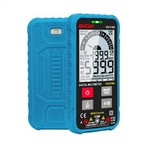
2. Put the gear of the digital multimeter on the 200M gear of the ohm gear, put one test lead on one of the two outgoing wires on the load side, and the other test lead touches the wall, preferably touching the ground wire or temporarily. Ground wire. After the number displayed on the multimeter is stable, the insulation resistance value of the main line is read out.
If the insulation resistance value is less than 0.5 megohm, then there is a problem with the main circuit. If the insulation resistance is above 0.5 megohm, it can be ruled out that the main circuit is faulty. Measure the other wire in the same way, and also check the value to see if there is a problem with the main wire.
3. Check the insulation resistance value of the shunt and each electrical appliance, and use the same method to test one by one until the fault point is found.