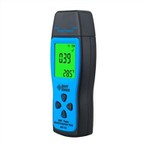
The basic selection basis of switching power supply
First, the basic basis for selecting a switching power supply
Voltage and current ranges, these are the two easiest indicators to determine, as long as they are calculated based on the power consumption of the circuit. Consideration should also be given to testing high and low supply voltage extremes.
Most fixed power supplies allow the output voltage to vary within ±10%. If this does not meet the circuit requirements, you can choose a power supply with adjustable output or a wider range of variation.
If the power supply is used to power the combined device, 75% to 90% of the maximum current required by the device will be provided by one power supply, and the insufficient part can be connected to two or more power supplies in parallel.
2. Expansion and safety of switching power supply
1. Work in parallel or in series
When one power supply cannot meet the required voltage or current range, two or more power supplies (or different outputs of the same power supply) can be used in parallel or in series. In this mode of operation, the connection between the voltage stabilization and control circuits between the power modules still exists, but one power supply is used as the master control side and the other power supply is used as the controlled side.
2. Overload protection
Because a power supply is used for different circuits, the current flow of these circuits may be unknown. In order to avoid damage to the power supply, it is necessary to set the range of the protection circuit.
Almost all power supplies have the following characteristics: When the output range is exceeded, the output will either remain at the maximum output value, or the power supply will shut itself down. In addition to the output range that can be set by the program, some programmable power supplies can also automatically set the type of stable output of the power supply. That is to say, when the voltage or current required by the external circuit exceeds the set limit, the power supply can automatically change from a constant voltage source to a constant current source or from a value current source to a constant voltage source.
Adding protection diodes to the power supply can prevent damage caused by wrongly connecting the polarity of the external power supply. Thermal sensors are also used to prevent burning out of the power supply due to continuous operation of the power supply in an overloaded state or ineffective cooling.
3. The source of potential damage inside the switching power supply
1. Pulsation and noise
An ideal DC power supply should provide pure DC, but there are always some disturbances, such as pulsating current and high-frequency oscillation superimposed on the output port of the switching power supply. These two types of interference, plus the spike noise generated by the power supply itself, cause the power supply to drift intermittently and randomly.
2. Stability
When the line voltage or load current changes, the output voltage of the DC power supply will also fluctuate. The degree of voltage regulation is determined by the parameters of the voltage regulator circuit, and the parameters refer to the capacity of the filter capacitor and the rate of energy release.
If the power supply is powered by a relatively constant source, then only basic load regulation is required. The size of the stability is generally defined as the percentage of the output voltage at no-load or full-load, or the change value of the voltage.
3. Internal impedance
The relatively large internal resistance of the power supply has two disadvantages for the load. First, it is not conducive to the operation of the load stabilization circuit. What is more disadvantageous is that any change in the load current will cause fluctuations in the output of the DC power supply. The impact of this fluctuation on the test results is exactly the same as that of pulse and noise on the test results.
4. Switching power supply transient response or recovery
The size of power supply transient response and recovery time indicates the size of the power supply voltage stabilization circuit's ability to restore normal voltage when the output load suddenly changes. There are two parameters to calibrate the transient response and recovery of the power supply: one is the deviation value of the output when the load changes suddenly; the other is the time it takes for the output to return to the original value. For the sake of uniformity, generally when the load changes by 10%, the output deviation is calibrated by the millivalues of the output deviation from the peak voltage, and the recovery time is calibrated by the millivolts used for the output to return to the normal value. Other manufacturers measure recovery time with larger load current changes. For example, when the output current changes from 50% to 100%, it takes the time to return to the normal value.