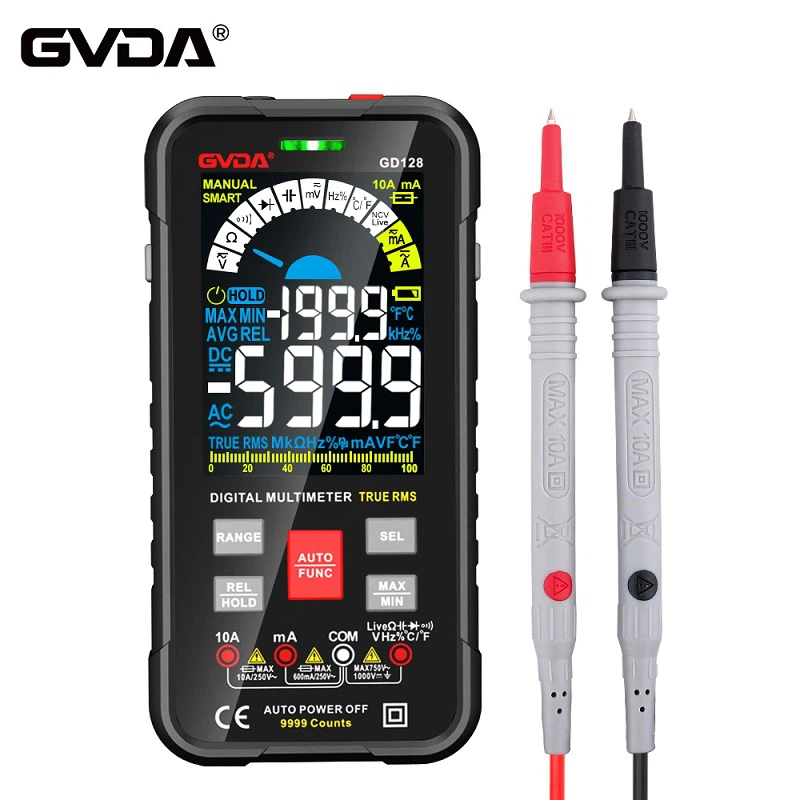
The content of the measurement range and measurement rate of a digital multimeter
measuring range
In a multifunctional digital multimeter, different functions have corresponding maximum and minimum values that can be measured.
Measurement rate
The number of times a digital multimeter measures the amount of electricity being measured per second is called the measurement rate, and its unit is "times/s. It mainly depends on the conversion rate of the A/D converter. Some handheld digital multimeters use measurement cycles to indicate the speed of measurement. The time required to complete a measurement process is called the measurement cycle.
There is a contradiction between measurement rate and accuracy indicators, usually the higher the accuracy, the lower the measurement rate, and it is difficult to balance the two. To solve this contradiction, different display digits or measurement speed conversion switches can be set on the same multimeter: add a fast measurement gear, which is used for A/D converters with faster measurement speed; By reducing the number of display digits to significantly increase the measurement rate, this method is relatively common in application and can meet the needs of different users for measurement rate.
Introduction to the Resolution of Digital Multimeters
The voltage value corresponding to the last word on the lowest voltage range of a digital multimeter is called resolution, which reflects the sensitivity of the instrument. The resolution of digital instruments increases with the number of displayed digits. The highest resolution indicators that a digital multimeter with different digits can achieve are different.
The resolution index of a digital multimeter can also be displayed using resolution. Resolution refers to the percentage of the minimum number (excluding zero) that the instrument can display to the maximum number.
It should be pointed out that resolution and accuracy belong to two different concepts. The former characterizes the "sensitivity" of the instrument, that is, the ability to "recognize" small voltages; The latter reflects the "accuracy" of the measurement, that is, the degree of consistency between the measurement results and the true value. The two are not necessarily related, so they cannot be confused, let alone mistakenly assume that resolution (or resolution) is similar to accuracy, which depends on the comprehensive error and quantization error of the internal A/D converter and functional converter of the instrument. From a measurement perspective, resolution is the "virtual" indicator (independent of measurement error), while accuracy is the "real" indicator (which determines the size of measurement error). Therefore, increasing the number of display digits arbitrarily to improve the resolution of the instrument is not feasible.