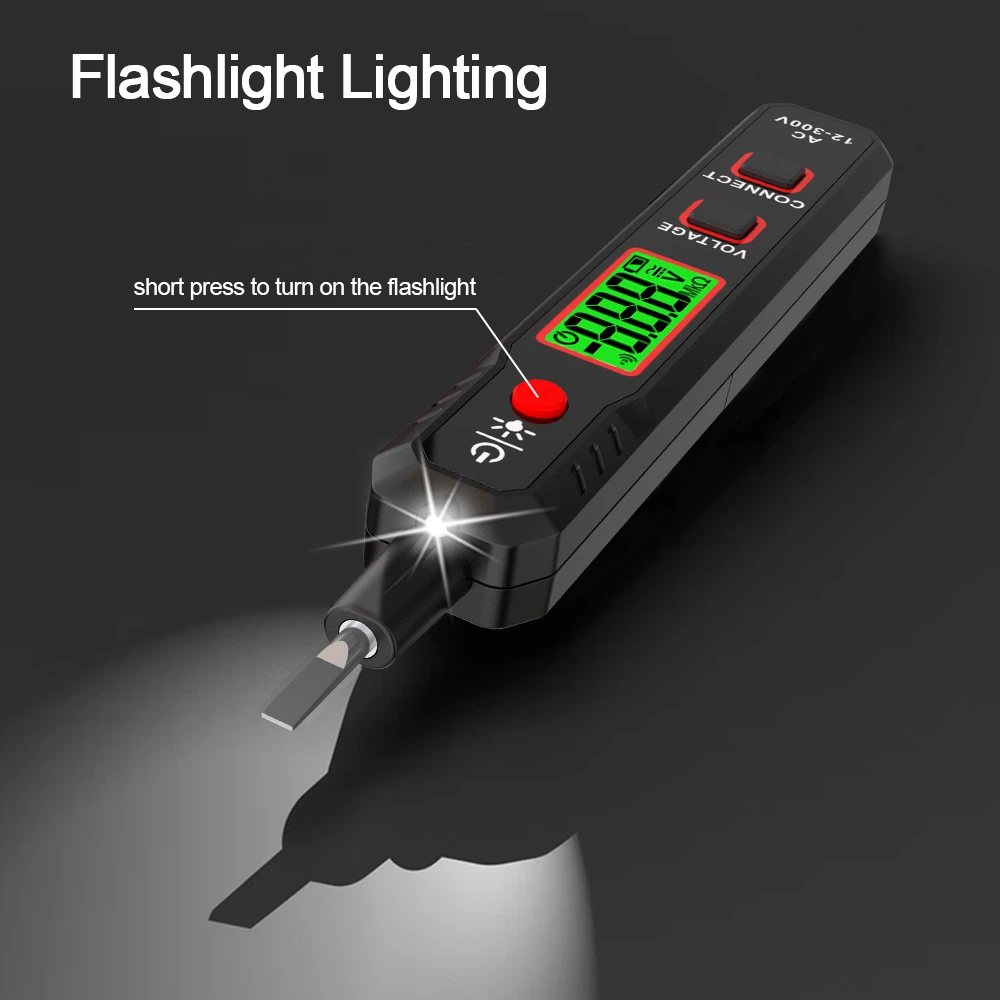
Why does the live wire always light up when using a measuring pen when the negative half cycle flows from the zero line to the live line
Using a test pen to measure the brightness of the live wire is because the voltage between the live wire and the ground is 220V. When measuring, the live wire passes through the resistance inside the pen and the human body is grounded. At this time, there will be current flowing through, so the light will be on. And the voltage of the zero line to the ground is zero volts, because the zero line itself is connected to the earth and is equipotential with the earth you are in, so there is no potential difference and no current can be formed, so it naturally does not light up.
Why is the zero line zero? This is because it is grounded, and the specified potential of the earth is zero, so the natural zero line potential is zero. This is also the reason why the human body will not get an electric shock when standing on the ground and grasping the zero line.
The zero line is the line from the neutral point of the transformer, which is the circuit from the live line to the electrical appliance. When the zero line is led out at the midpoint of the transformer, it will be grounded, so you can think of the zero line as the ground where the transformer is located in the distance, and the ground wire in the home is the protective ground where your home is located. Because the earth also has resistance, sometimes the zero line in a home can also be charged, but the voltage is very small and does not cause personal danger.
The potential of the positive half cycle live wire is higher than the zero line, and the potential of the negative half cycle live wire is lower than the zero line. Water flows lower, and the same goes for current. Here, we need to correct a misconception that many people believe that current can only flow from the positive pole to the negative pole. In fact, current also flows from the positive pole with high potential to the positive pole with low potential
The potential mentioned here may not be understood by those who ask this question, but it can also be understood as voltage. In fact, it is not the same concept. Voltage is the potential difference, assuming that the potential is the height, voltage is the height difference. For example, there are two reservoirs on the mountain, one is 100 meters (potential) and the other is 150 meters (potential), so their height difference (voltage) is 50 meters. If the two reservoirs are connected, the high water will flow to the low water, If they are all 150 meters (potential), it is impossible to flow (voltage is zero), even if their height (potential) is very high
If understood above, the electric potential of the zero line is assumed to be the surface of the well, with a fixed and constant height. The fire line is a bucket filled with water, with a variable height. When the bucket is above the surface of the well, the water will flow towards the well, and vice versa
Why does the measuring pen light up on the live line but not on the zero line? The top of the measuring pen needs to be connected to the human body and then to the ground, and the zero line is also connected to the ground, and their potential is the same high