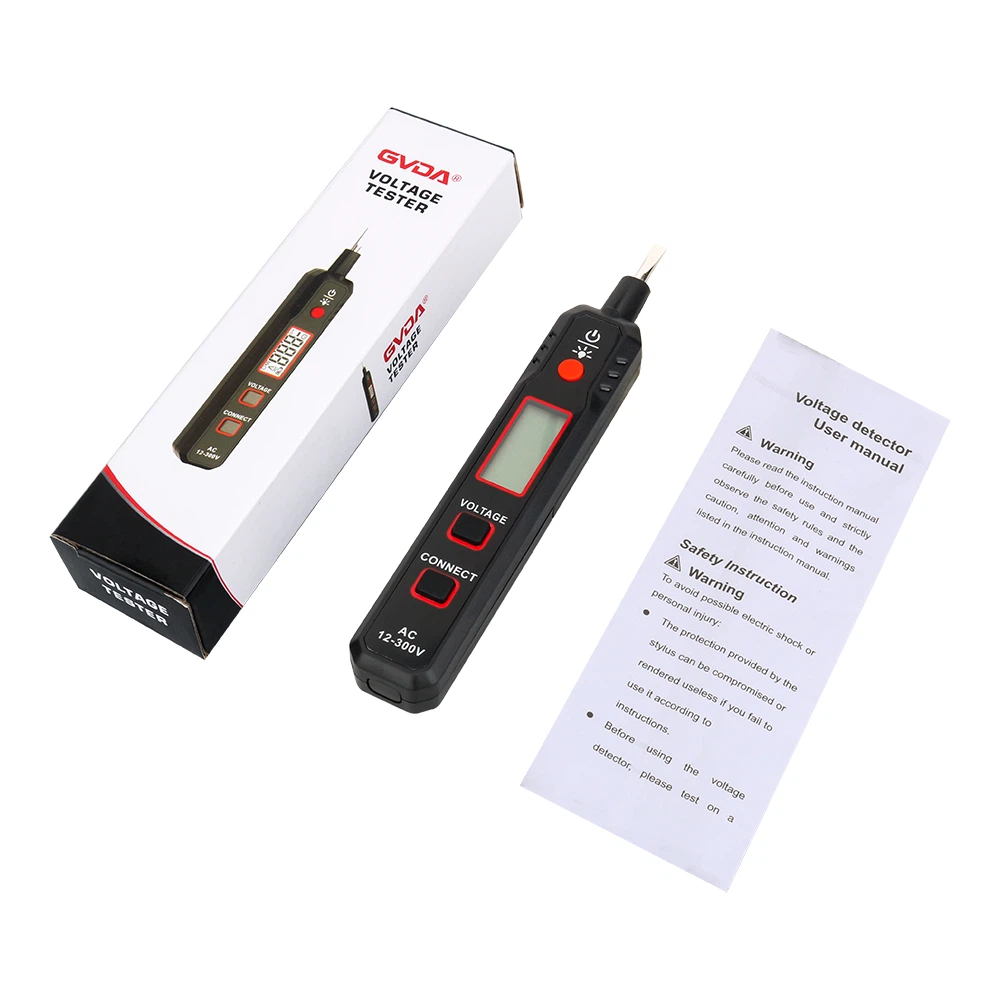
8 functions of the electric test pen
1. Judging whether the electrical contact is good: When measuring the electrical circuit with the electric test pen, if the neon tube flickers and the brightness is unstable, it means that the electrical circuit has poor contact.
2. Judging the voltage level: the higher the voltage detected by the test pen, the brighter the neon tube. If the brightness of the neon tube of the test pen is different when detecting different voltages, it can be preliminarily judged that the brightness is dark and the voltage is low; the brightness is bright and the voltage is high.
3. Judgment is induced electricity: If a general electric test pen is used to measure a long three-phase line, even if one phase of the three-phase AC power supply is missing, the neon tube of the low-voltage test pen will light up during detection, making it difficult to make a judgment. If you use a low-voltage testing pen and connect a small capacitor with a voltage of 1500 picofarads and a withstand voltage greater than 250 volts, you can determine which phase is missing: measure the live line, and the neon tube of the testing pen glows normally; Light or no light.
4. Judgment of alternating current and direct current: In the case that the electric pen can be used to measure, if only one pole in the neon tube lights up, it means direct current. If the two poles in the neon tube light up at the same time, it means that it is alternating current.
5. Judging the same-phase or out-of-phase electricity of the AC power supply: First, hold a low-voltage test pen in each hand, then stand on an insulating object such as an insulating table, a wooden stool, and then touch the two test pens to the two terminals to be tested at the same time. Carefully observe the luminescence of the neon tubes of the test pens: the neon tubes of the two test pens glow brightly, indicating that the two wires are out of phase;
6. Judging the open circuit of the neutral line: the open circuit of the neutral line can also be detected and judged by the electric test pen: first connect one end of the electric test pen to the neutral line, and then connect the other end to the ground wire. When the neon tube of the test pencil lights up, it means that the neutral line is open.
Judging whether the object generates static electricity: hold the electric test pen around the object to be judged, and if the neon tube of the electric test pen lights up, it means that there is static electricity on the object to be judged.
7. Judgment of DC grounding, positive grounding, and negative grounding: People stand on the ground, touch the DC with the electric pen, and then judge according to the state of the electric pen: if the neon tube of the electric pen lights up, it means that there is a grounding phenomenon in the DC; if the neon of the electric pen If the tube is not lit, it means that there is no DC grounding; if the tip of the test pen is lit, it means that the DC is positively grounded; if the pole at the end of the pen is lit, it means that the DC is negatively grounded.
8. Judging the same-phase or out-of-phase electricity of the AC power supply: First, hold a low-voltage test pen in each hand, then stand on an insulating object such as an insulating table, a wooden stool, and then touch the two test pens to the two terminals to be tested at the same time. Carefully observe the luminescence of the neon tubes of the test pens: the neon tubes of the two test pens glow brightly, indicating that the two wires are out of phase;