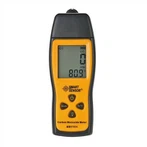
8 ways to use the multimeter
(1) Familiar with the meaning of each symbol on the dial and the main function of each knob and selector switch.
(2) Carry out mechanical zero adjustment.
(3) According to the type and size to be measured, select the gear and range of the changeover switch, and find out the corresponding scale line.
(4) Select the position of the test lead jack.
(5) Measuring voltage: When measuring voltage (or current), choose a good range. If you use a small range to measure a large voltage, there will be a danger of burning the meter; if you use a large range to measure a small voltage, the pointer deflection is too small. Unable to read. The selection of the range should try to make the pointer deflect to about 2/3 of the full scale. If you do not know the voltage to be measured in advance, you should first select the highest range, and then gradually reduce to a suitable range.
a. Measurement of AC voltage: Put one switch of the multimeter in the AC and DC voltage range, and the other switch in the appropriate range of AC voltage, and connect the two pens of the multimeter in parallel with the circuit or load under test.
b Measurement of DC voltage: Put one switch of the multimeter on the AC and DC voltage range, and the other switch on the appropriate range of DC voltage, and connect the "+" test lead (red test lead) to the high potential, "- "The test lead (black test lead) is connected to the low potential, that is, let the current flow in from the "+" test lead and flow out from the "-" test lead. If the test leads are reversed, the pointer on the meter head will deflect in the opposite direction, and it is easy to bend the pointer.
(6) Current measurement: When measuring DC current, set one switch of the multimeter to the DC current gear, and the other switch to the appropriate range from 50uA to 500mA. The range selection and reading method of the current is the same as that of the voltage. When measuring, the circuit must be disconnected first, and then the multimeter is connected in series to the circuit under test according to the direction of the current from "+" to "-", that is, the current flows in from the red test lead and flows out from the black test lead. If the multimeter is connected in parallel with the load by mistake, the internal resistance of the meter head is very small, which will cause a short circuit and burn the meter. Its reading method is as follows:
Actual value = indicated value × range / full deviation
(7) Measuring resistance: When measuring resistance with a multimeter, the following methods should be followed:
aSelect the appropriate magnification gear. The scale line of the ohm block of the multimeter is uneven, so the selection of the magnification block should make the pointer stay on the thinner part of the scale line, and the closer the pointer is to the middle of the scale, the more accurate the reading. In general, the pointer should be between 1/3~2/3 of the scale.
b ohm zeroing. Before measuring the resistance, the two test leads should be short-circuited, and the "ohm (electrical) zero adjustment knob" should be adjusted at the same time so that the pointer just points to the zero position on the right side of the ohm scale. If the pointer cannot be adjusted to the zero position, it means that the battery voltage is insufficient or there is a problem inside the meter. And every time the magnification gear is changed, the ohm zero adjustment must be performed again to ensure accurate measurement.
c reading: the reading of the meter multiplied by the magnification is the resistance value of the measured resistance.
(8) Precautions
a When measuring current and voltage, it is not possible to change the range with power on
b When selecting the range, choose the large one first, then the small one, and try to make the measured value close to the range
c When measuring resistance, it cannot be measured with electricity. Because the multimeter is powered by the internal battery when measuring resistance, if the measurement is live, it is equivalent to connecting an additional power supply, which may damage the meter head.
d After use, the transfer switch should be in the maximum gear or neutral gear of the AC voltage.