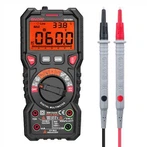
A Method for Judging the Leakage Position of Low Voltage Lines with a Clamping Ammeter
In the case of power transmission on low-voltage lines, a clamp type ammeter can also be used to determine the location of low-voltage line leakage at the low-voltage user connection line within the suspected range.
During detection, the phase and neutral wires of single-phase electrical users should be placed in the jaws of the clamp meter at the same time, and the three phase and neutral wires of three-phase electrical users should also be placed in the jaws at the same time.
(1) If there is no leakage fault in the line, then the sum of the phasors of the load current magnetic flux is zero, and the indication of the clamp meter is also zero;
(2) If there is leakage current in the circuit, the clamp ammeter can detect the leakage current.
When searching for leakage faults, it is necessary to pay attention to safety, have someone monitor, and take safety protection measures. When reading clamp table data, it is important to maintain a safe distance between the human body and live parts.
The clamp type ammeter is convenient to carry and can directly measure the working current of electrical equipment in operation without disconnecting the power supply or disassembling the wires, facilitating timely understanding of the working condition of the equipment. Therefore, it is widely used in repairing electrical appliances (such as air conditioners), but the following points should be paid attention to during use:
Before measurement, first estimate the magnitude of the measured load current and select the appropriate range gear accordingly. If it is impossible to estimate, in order to prevent damage to the clamp ammeter, the maximum range should be selected for measurement and gradually changed to the appropriate range. When changing the range, the jaws of the clamp type ammeter should be opened.
To avoid or reduce errors, the measured wire should be placed at the center of the clamp mouth as much as possible during measurement.
3. The jaws of the clamp type ammeter should be tightly engaged during measurement. If there is noise during measurement, the jaws can be reopened and closed again to ensure that the jaws are properly engaged; Or carefully inspect and remove debris and dirt from the jaws before measuring.
When measuring small currents, in order to obtain accurate readings, if conditions permit, the measured current carrying wire can be wound a few more turns before being placed in the clamp for measurement. However, the reading value of the instrument at this time is not the current value of the measured current carrying wire, but the product of the actual current value of the measured wire and the number of turns of the wire. Therefore, the reading value on the instrument should be divided by the number of turns of the wire placed in the clamp to obtain the actual (approximate) current value of the measured wire.
5. After the measurement is completed, the range switch should be placed in the highest position to prevent damage to the instrument due to carelessness in selecting the appropriate range during the next use.