A miscellany of several methods of moisture testing
Moisture testing plays a vital role in a variety of fields. Whether in the chemical, agricultural, food production or pharmaceutical industries, accurate measurement of the moisture content of substances is essential for quality control and production processes. Currently, the main methods for moisture detection in solid substances include direct and indirect measurement.
Indirect Measurement Methods
Among the indirect measurement methods, the infrared absorption method has attracted much attention because of its fast, high-precision and non-contact characteristics. However, it can only measure the moisture content on the surface of the material, it is sensitive to the material and the colour, and cannot measure the black material. In addition, the high cost of equipment is also one of the disadvantages of this method.
1, infrared absorption method - the use of material absorption of infrared wavelengths of light, the determination of moisture content. Although fast, high-precision, non-contact measurement, but can only measure the surface moisture, and sensitive to the substance and colour tone, the cost is high.
2, microwave method - the use of high-frequency waves on the substance of the dielectric constant and dielectric loss changes, the determination of moisture content. However, the accuracy of the particles are not uniform substances is poor.
3, neutron method - through the collision of neutrons and water molecules, determine the number of slow neutrons to determine the moisture content. But the scope of application by the material density and hydrogen-containing substances interference.
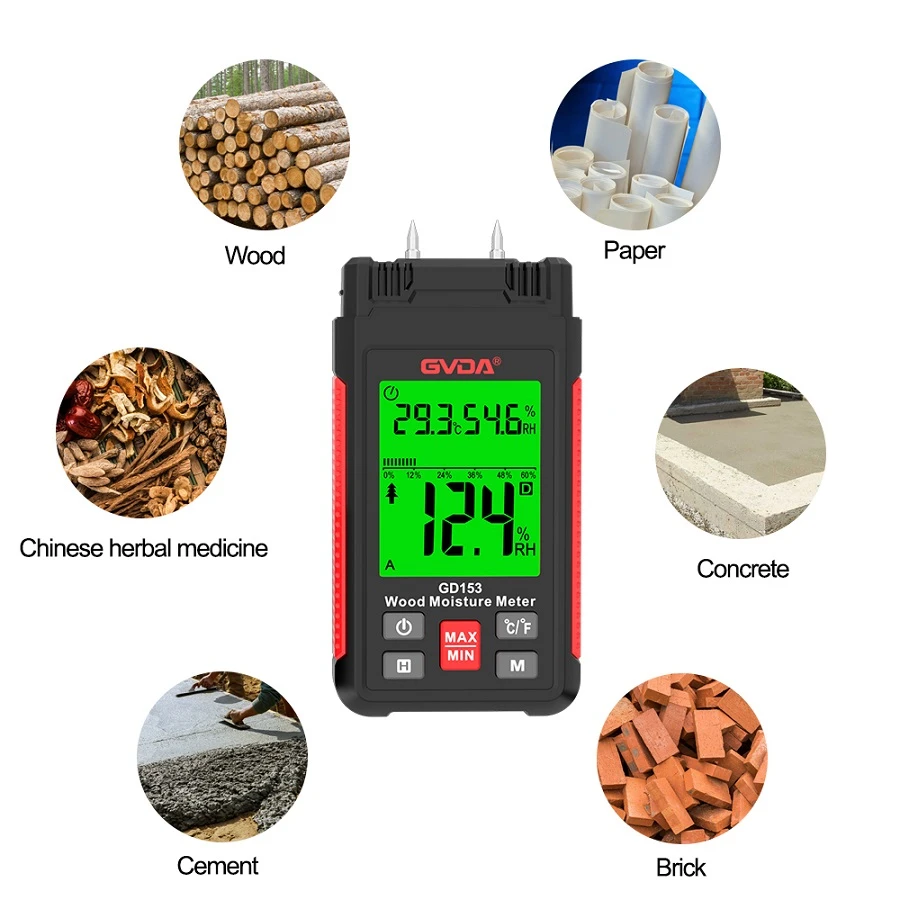
4, electrical measurement method - including capacitance and resistance method, applicable to different dielectric constant of the material. Simple structure, low cost, but the measurement accuracy is not high.
Direct Measurement Method - Drying Loss-in-Weight Method
Drying weightlessness method is one of the widely used direct measurement methods. The method is applicable to a variety of substances such as solids, liquids, semi-solids, etc. It has the advantages of simple operation and low cost. However, this method is difficult in the measurement of high moisture content samples, because high moisture content samples are prone to changes in volatile substances during the drying process, resulting in inaccurate weighing results, the need to use the second drying method and other methods for correction.
1, direct drying method - under normal pressure, the use of constant temperature drying, weighing the sample before and after the weight difference to calculate the moisture content. Equipment including electric constant temperature drying oven, weighing disc and balance.
2, high-temperature timing method - at higher temperatures (about 130 ℃) for a shorter period of time to determine the moisture content. Measurement is fast but the accuracy is poor.
3, tunnel oven method - similar to the high-temperature timing method, but the measurement process is continuous, simple operation.
4, Secondary drying method - suitable for samples with high moisture content, to reduce the error through two drying measurements.
5, Decompression drying method - suitable for samples that do not decompose easily at high temperatures, reducing the vapour pressure of water so that the water evaporates at lower temperatures.