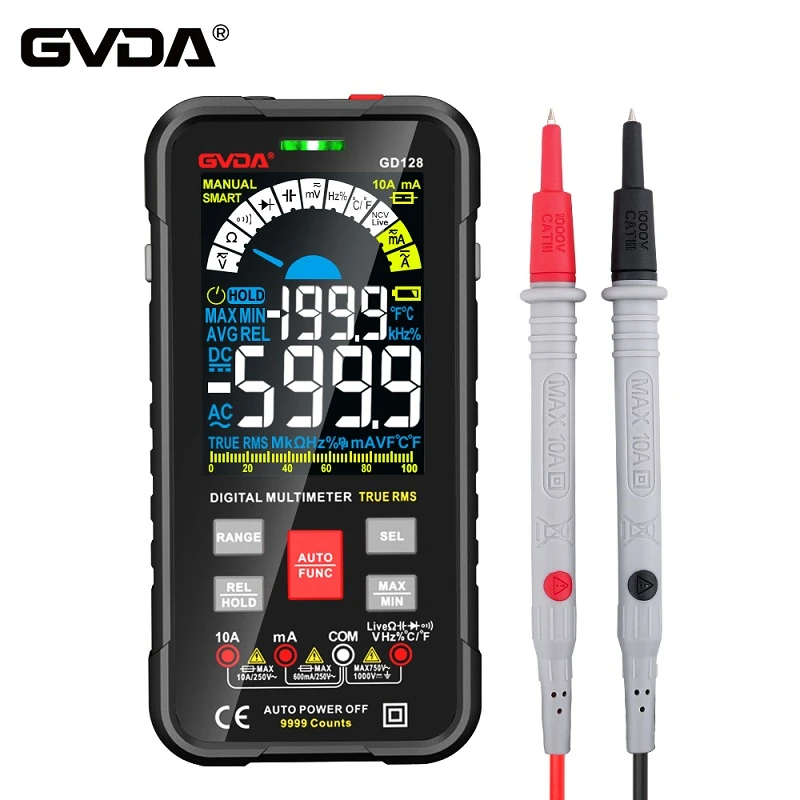
A multimeter is mainly used for the following purposes:
① Voltage Measurement: A multimeter can measure the magnitude of DC and AC voltage. By contacting the positive and negative poles of the circuit under test, it helps us check the voltage condition and determine whether the circuit works normally.
② Current Measurement: A multimeter can measure the magnitude of DC and AC current. When the test probes are connected in series into the circuit under test, it helps us obtain the current value to judge the direction and intensity of the current in the circuit.
③ Resistance Measurement: A multimeter can measure resistance values. By touching the two ends of a resistor with the test probes, it helps us read the resistance and verify whether the resistor meets the requirements.
④ Auxiliary Tool: A multimeter also serves as an auxiliary tool to inspect and verify circuit connections and the normal operation of components. By measuring voltage, current and resistance at different points of the circuit, we can locate faults for subsequent repair and adjustment.
⑤ Teaching Tool: Multimeters play an important role in electronic engineering and electrical teaching. They help students understand circuit and electrical principles and practice measurement and experimental skills.
In summary, a multimeter is a convenient and practical electronic measuring instrument. It is used to measure physical quantities such as voltage, current and resistance, and assists in fault diagnosis and circuit connection verification. With proper operation, we can better understand the characteristics and working status of circuits, so as to improve the efficiency and accuracy of circuit design, maintenance and troubleshooting.