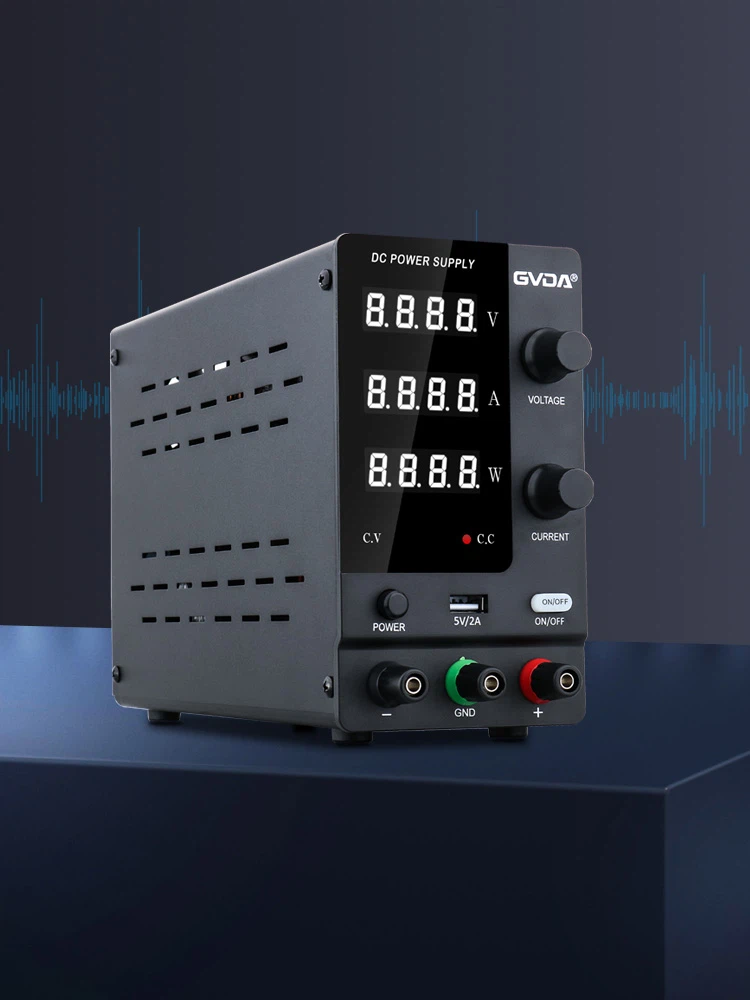
A simple understanding of the difference between switching power supply and linear switching power supply
LED power supply is divided into two categories: switching power supply and linear switching power supply. Each circuit configuration has its own advantages and disadvantages.
Linear switching power supply designs have inherent efficiency limitations. A linear regulator maintains a dropout voltage, which is power wasted by the regulator. The power efficiency of a linear switching power supply is equal to the ratio of output power to input power. To improve circuit efficiency, keep the dropout voltage across the linear regulator small. In low power systems, the quiescent current also needs to be small. The working mode of the switching power supply can make the efficiency of the transistor reach 95%. In this mode, the transistor changes at high frequencies. ON" and "OFF" states. When the transistor is in the "ON" state, it remains in high gain mode (saturation) and the resistance is at a small value. Small switching resistors allow the converter to work.
Switching power supplies and linear switching power supplies produce ripple, which causes flicker. Generally, the flicker rate of LED lights driven by switching power supplies is much lower than that of LED indicators driven by linear power supplies. Switching power supplies typically use electrolytic capacitors across the diode bridge to smooth peaks in the input waveform, and storage capacitors to filter small harmonics at the output. Linear switching power supplies inherently produce an intermediate DC voltage with a high ripple percentage. The input filter capacitor is usually not used because a large capacitor on the bit 1 side will reduce the power factor. (PF). When flicker control conflicts with PF compliance, flicker control may be lost because there are no relevant laws and regulations requiring this parameter.