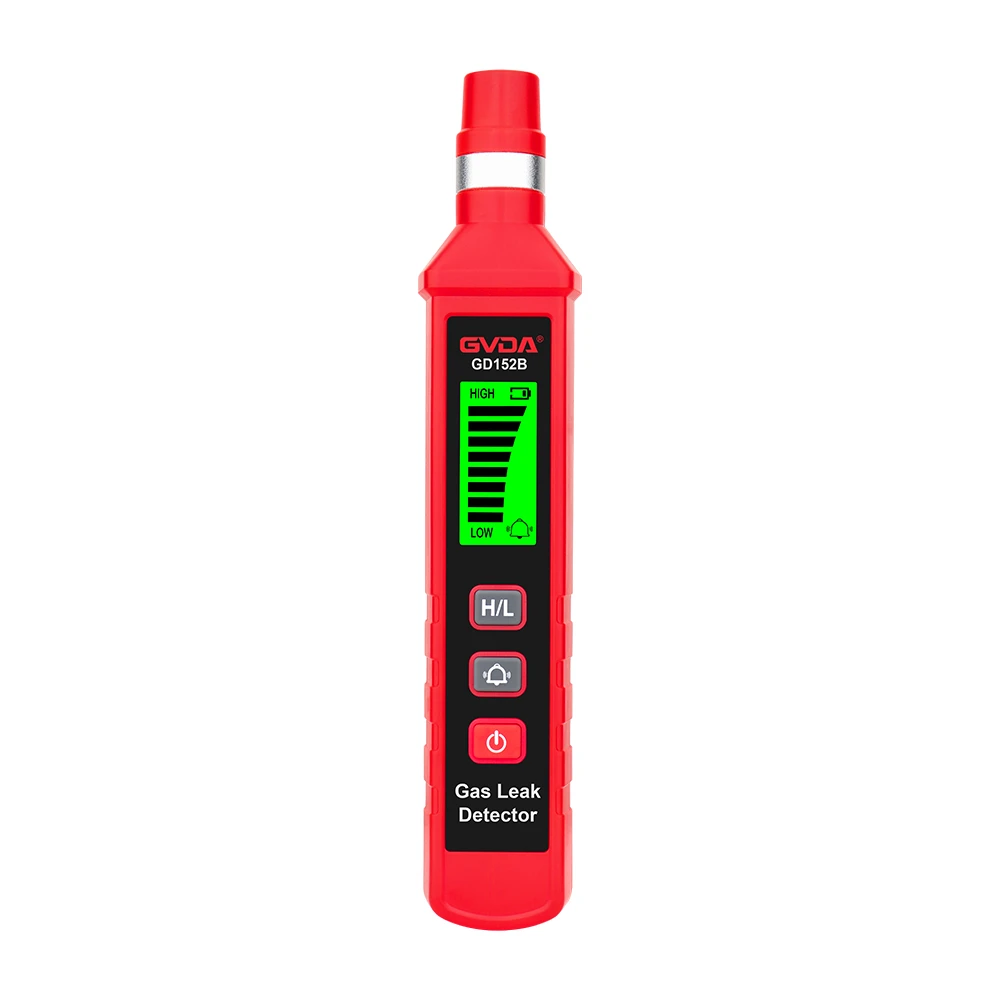
Alarm processing method for household combustible gas detector
What should I do if the combustible gas detector used by ordinary household users encounters an alarm? This may be a problem that many ordinary families encounter, or it may be a problem that many household users cannot solve. Below, our Nanjing combustible gas detector company will provide a brief explanation on how to handle alarms from household combustible gas detectors. When a household combustible gas detector alarms, the first step is to determine whether it is a false alarm or a real combustible gas leak. When it is indeed a combustible gas leak, users should not panic because when the combustible gas detector emits an alarm sound, it only indicates that the concentration of combustible gases in the air has reached the lower limit of the alarm concentration set by the alarm, and does not mean that there is a risk of fire or even explosion. For safety reasons, the alarm concentration value set by the combustible gas detector is far from the lower explosive limit of flammable gases. So, if users encounter the alarm beeping and starting, they should promptly arrive at the scene, open doors and windows to clear the air, and find the source of the leak for timely treatment. After the processing is completed, the concentration of combustible gases in the air should quickly drop below the alarm concentration. At this point, the combustible gas alarm will automatically return to its normal monitoring state. At this point, we only need to reset the electromagnetic cut-off natural gas supply valve, check and repair the location of the combustible gas leak, and restore the supply of natural gas.
Gas detectors for combustible gases should be carefully selected
The combustible gas detector is a precision instrument for detecting the concentration of combustible gas leaks. Its main function is to automatically alarm when the gas leak reaches the warning value, reminding staff to take corresponding measures in a timely manner to avoid accidents. It is an important security equipment for enterprises! How should we choose such important security equipment?
Firstly, determine the usage scenario:
The selection of gas detectors varies depending on the industrial environment;
Secondly, confirm the type and concentration range of the gas to be detected:
The types of gases encountered by each production department are different. When choosing a gas detector, all possible situations should be considered. For gases with less toxicity such as natural gas, liquefied gas, methane, etc., choosing an LEL detector is undoubtedly more suitable. This is not only because the principle of LEL detector is simple and widely used, but also because it has the characteristics of easy maintenance and calibration; For gases with relatively high toxicity such as coal gas and carbon monoxide, it is necessary to prioritize the use of a specific gas detector to ensure the safety of workers. The concentration measurement of toxic gas detectors based on electrochemical principles is usually in ppm units!