An analysis of moisture measurement in concrete
Builders and flooring contractors sometimes rely on calcium chloride testing to monitor the moisture content of a concrete slab to determine if the slab is ready to receive a floor covering. Calcium chloride testing can measure moisture (vapour emissions) in the upper ½ to ¼ inch of the slab, however, professionals ± debate whether it gives contractors the full picture. While the importance of contractors knowing the surface moisture of the slab cannot be overstated, it is important to know the moisture content of the slab.
To help improve the process of accurately measuring moisture in concrete, ASTM developed Standard F-2170.Standard F2170 is a test method that offers some distinct advantages over calcium chloride. The main advantage is that this test method places the probe within the concrete slab itself. This process, known as the in-situ method, provides contractors with accurate relative humidity (RH) readings from within the concrete slab itself.The RH test is an excellent tool for predicting the performance of a slab once it reaches equilibrium. Used in this manner, it predicts potential moisture-related floor failures.
Concrete absorbs water and a 4-5" thick slab may take 30-60 days to cure properly. Once the concrete has cured for at least 30 days, testing for moisture can begin. Because concrete takes a long time to dry even under weigh-in conditions, it is usually a waste to attempt a moisture test before 30 days. If you are working in a particularly humid environment, the concrete may take longer to test.
Moisture measurements need to be taken in the concrete before applying adhesives, floor coverings or other structural elements. If excess moisture remains in your concrete slab, any adhesives, wood, tarps, tiles or sprayed resilient flooring you install will eventually fail, potentially leading to litigation and the need for demolition and replacement at considerable cost.
Imagine completing a large construction project, such as a new school, only to have to rip up the flooring after installation because trapped moisture in the concrete can cause flooring defects. Such a problem would be a safety hazard for students, staff and faculty, and therefore would need to be corrected. Proper moisture testing could have pre-determined the problem, but now construction deadlines will be missed, penalties will be assessed to the construction contract, and material costs will rise.
Because of this potential disaster, it is better to correct any moisture problems as soon as possible. Whether the concrete slab is for a healthcare facility, school, warehouse or office building, ASTM F2170 testing should be used to prevent structural and cosmetic damage to the finished building.
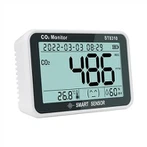
You need to have moisture/relative humidity meters and sensors for high accuracy in your measurements.
Your equipment should be able to measure the relative humidity (RH) of the concrete as well as the surrounding ambient temperature. By determining the moisture conditions within and around the slab, it is easier to determine when it is safe to develop on concrete.
Using a meter that complies with ASTM F2170, the moisture of concrete at its core can be more accurately measured using a field probe that goes inside the concrete.
The importance can't be overstated of knowing that moisture lurking beneath a seemingly solid concrete surface can cause floor cupping, cracking and buckling if not properly dried. For this reason, when you are working with large amounts of concrete, you need to conduct accurate and effective moisture tests on your concrete slabs.
Don't rely solely on calcium chloride testing, which will only allow you to read the moisture on the surface of the concrete. Get a multi-faceted view by using the new, most reliable ASTM F2170-compliant meter that utilises an in-situ probe in addition to the regular calcium chloride test. Using a combination of both methods provides good data and increased confidence in deciding how to install the floor.