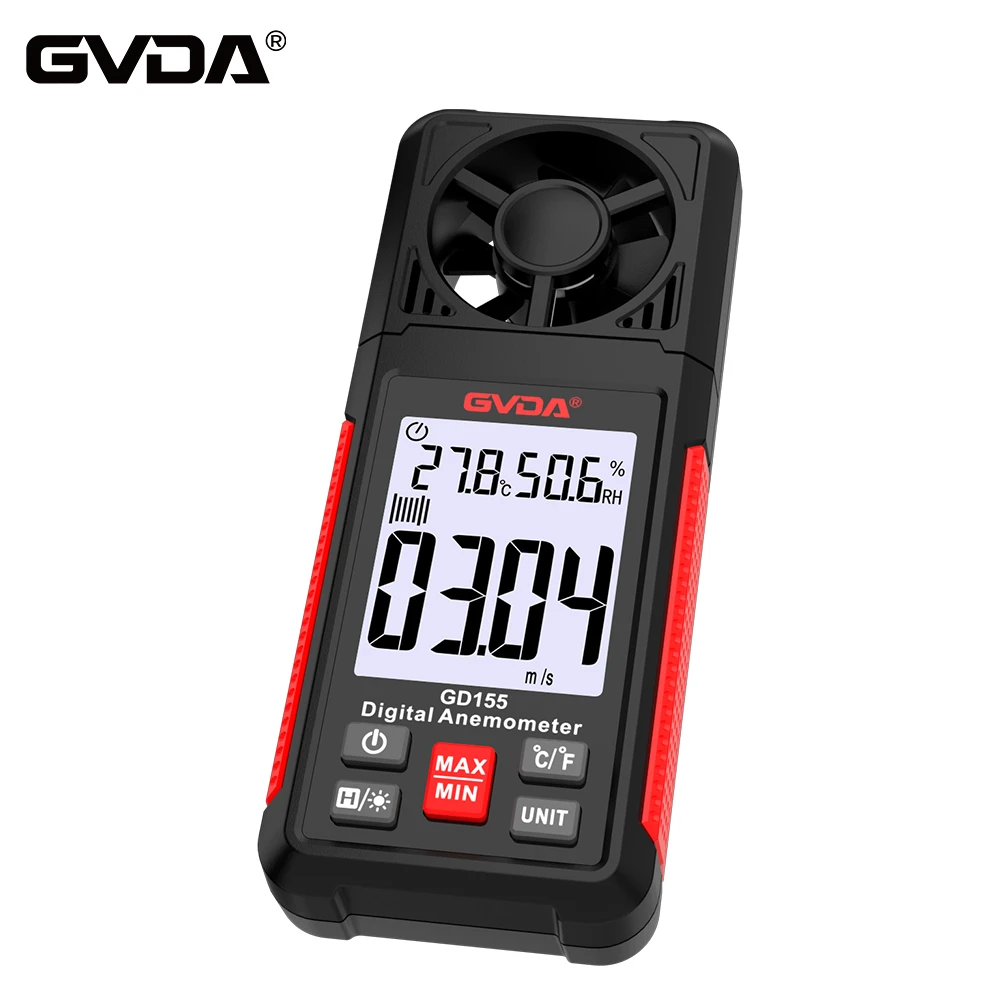
Anemometer measuring technology and how to choose!
The measurement range of flow velocity from 0 to 100m/s can be divided into three sections: low speed: 0 to 5m/s; Medium speed: 5 to 40m/s; High speed: 40 to 100m/s. The thermal sensitive probe of the anemometer/anemometer is used for measuring * * from 0 to 5m/s; The rotary probe of the anemometer/anemometer measures a flow velocity of 5 to 40m/s with ideal results; By using a pitot tube, excellent results can be obtained within a high-speed range. An additional criterion for selecting the flow velocity probe of an anemometer/anemometer correctly is temperature. Typically, the temperature used for the thermal sensor of an anemometer/anemometer is around+-70C. The rotary probe of the specially designed anemometer/anemometer can reach 350C. Pitot tubes are used for temperatures above+350C.
Thermal sensitive probe for anemometer/anemometer
The working principle of the thermal sensitive probe of the anemometer/anemometer is based on the cold shock airflow taking away the heat on the thermal element. With the help of an adjustment switch, the temperature is kept constant, and the adjustment current is proportional to the flow rate. When using a thermosensitive probe in turbulence, airflow from all directions simultaneously impacts the thermal element, which can affect the accuracy of the measurement results. When measuring in turbulence, the reading of the thermal anemometer/anemometer flow velocity sensor is often higher than that of the rotary probe. The above phenomena can be observed during pipeline measurement. According to different designs for managing pipeline turbulence, it may even occur at low speeds. Therefore, the anemometer/anemometer measurement process should be carried out on the straight section of the pipeline. The starting point of the straight section should be at least 10 x D (D=pipeline diameter, in CM) before the measurement point; The endpoint should be at least 4 x D after the measurement point. The fluid cross-section must not have any obstruction. (Sharp edges, heavy overhangs, objects, etc.)
Wheel type probe for anemometer/anemometer
The working principle of the rotary probe of the anemometer/anemometer is based on converting the rotation into an electrical signal. First, it passes through a proximity sensing start to "count" the rotation of the rotary wheel and generate a pulse series. Then, it is converted and processed by the detector to obtain the rotational speed value. The large-diameter probe (60mm, 100mm) of the anemometer/anemometer is suitable for measuring turbulence at medium and low flow rates (such as at pipeline outlets). The small diameter probe of the anemometer/anemometer is more suitable for measuring airflow with a cross-sectional area greater than 100 times the cross-sectional area of the exploration head.