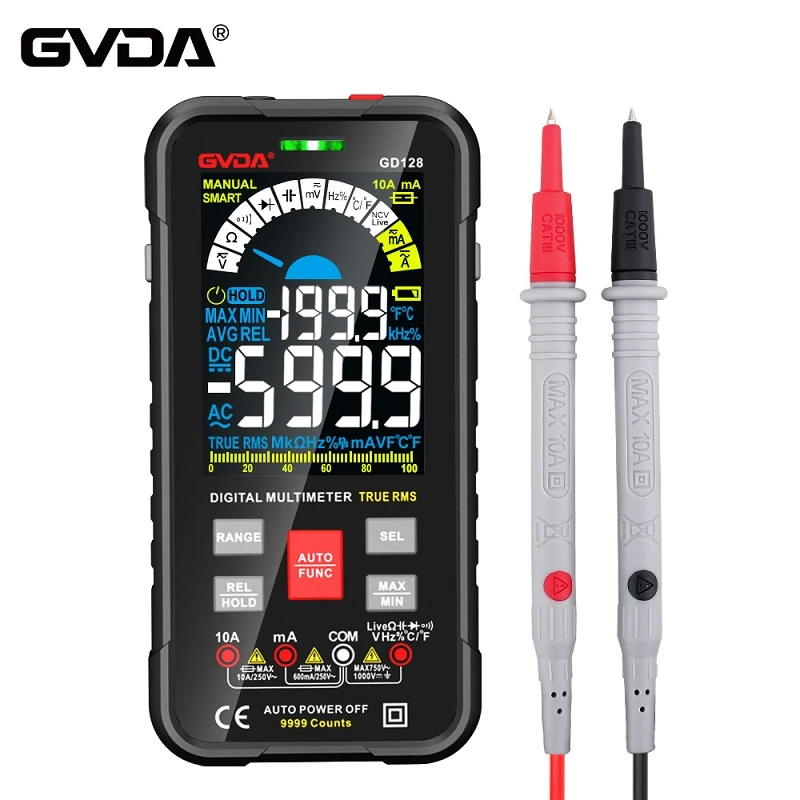
Applications of Fluke Multimeters for Automotive Repair
Testing the Alternator
The battery shall be fully charged at this point. Start the engine; the no‑load voltage should be 13.8–15.3 V. Then connect a carbon‑pile rheostat across the battery to load the alternator to its rated output current. Keep the engine speed at 2000 rpm. Use a Fluke 80I‑410 or 80I‑1010 current clamp to measure the current.
AC Leakage of the Alternator
An alternator generates current and voltage based on the principle of electromagnetic induction. Accessories connected to the vehicle charging system require a relatively stable voltage for steady current supply. A battery cannot be charged directly with AC; only rectified DC current is suitable for charging. Starter system faults are often confused with charging system faults. Many people replace a failed battery when the root cause actually lies in the charging system. Therefore, verify that the charging system works properly before replacing the battery. Confirm the battery is fully charged and has passed the load test. If the engine still cranks slowly, check the resistance of the starter circuit.
Measuring Field Current
Worn brushes restrict the field current and reduce the input to the generator. Apply a load and measure the field current with a current clamp. For the Integral GM Units of General Motors, short the two terminals together and connect them to the battery positive terminal with the vehicle stationary. Connect the multimeter in series for current measurement; the reading should be 10 A. The field current normally ranges from 2 A to 5 A. Higher field current corresponds to lower voltage. A carbon‑pile rheostat is required to regulate battery voltage.
Testing Ripple Voltage
Ripple or AC voltage can be measured using the AC range of a multimeter. Connect the black multimeter probe to a reliable ground, and the red probe to the "BAT" terminal on the rear of the alternator (not the battery). A good alternator in operation should produce an AC ripple voltage below 0.5 V(AC). Excessively high readings indicate faulty alternator diodes.
Starter system faults are frequently mistaken for charging system malfunctions. Many batteries are replaced as defective when the real issue originates from the charging system. Always confirm proper operation of the charging system prior to battery replacement. Ensure the battery is fully charged and passes the load test. If the engine still cranks slowly, check the resistance of the starter circuit.