Are digital multimeters a replacement for analog multimeters?
Undoubtedly, a multimeter can be said to be the most commonly used electronic measuring instrument for electricians, but choosing a digital multimeter or an analog (pointer) multimeter is a question. Some people say that digital multimeters have gradually replaced analog multimeters, but many professional electricians are still more accustomed to using analog multimeters. What are the differences between a digital multimeter and an analog multimeter? Which one is better to use?
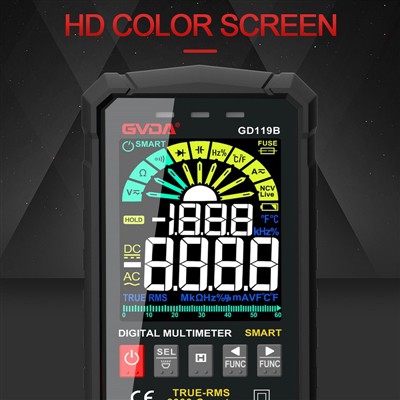
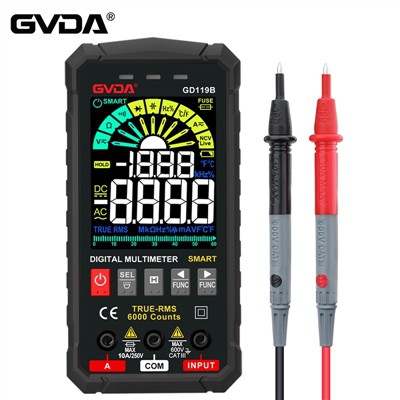
The biggest difference between a digital multimeter and an analog multimeter is the display of readings. A digital multimeter is a liquid crystal display with high resolution, which can fundamentally eliminate the parallax when reading data, making readings relatively convenient and accurate. In this regard, analog multimeters cannot compare, but they also have their own unique advantages, which are that they can intuitively reflect the changes in the properties of the measured object through the instantaneous deflection of the pointer.
Due to the fact that digital multimeters measure and display electricity in an intermittent manner, it is not convenient to observe the continuous changes and trends of the measured electricity. For example, a digital multimeter is not as convenient and intuitive as an analog multimeter to test the charging process of capacitors, the variation of thermistor resistance with temperature, and the observation of the variation characteristics of photoresistor resistance with light.
In terms of working principle, analog multimeters and digital multimeters are also different. The internal structure of analog multimeters includes a meter head, a resistor, and a battery. The meter head generally uses a magneto electric DC microampere meter. When measuring resistance, the internal battery should be used, and the positive terminal of the battery should be connected to the black probe, so the current flows out from the black probe and into the red probe. When measuring DC current, a shunt resistor is connected by shifting gears to divert the current. Since the full bias current of the meter is very small, a shunt resistor is used to expand the range. When measuring DC voltage, a resistor is connected in series with the meter head, and different additional resistors are used to achieve conversion between different ranges.
A digital multimeter is composed of a function converter, an A/D converter, an LCD display, a power supply, and a function/range conversion switch, among which the A/D converter generally uses an ICL7106 dual integration type A/D converter. ICL7106 adopts two integrals, the first of which integrates the input analog signal V1, known as the sampling process; The second integration of the reference voltage - VEF integration is called the comparison process. Count two integration processes using a binary counter, convert them into digital quantities, and display them in digital form. To measure AC voltage, current, resistance, capacitance, diode forward voltage drop, transistor amplification factor, and other electrical quantities, corresponding converters must be added to convert the measured electrical quantities into DC voltage signals.
The polarity of the battery connected inside a digital multimeter and a pointer multimeter is different: the digital red probe is connected to the positive pole of the battery, the black probe is connected to the negative pole, and the pointer type is exactly the opposite. The diode measured by the digital meter exactly matches the actual polarity of the diode, while the pointer type is exactly the opposite.
In use, analog multimeters are equipped with mechanical zero adjustment knobs or screws. If it is found that the pointer is not pointing to the mechanical zero position (i.e. the zero point of the voltage range scale or the infinity of the ohm range scale), the mechanical zero adjustment mechanism must be gently and slowly rotated with fingers or a screwdriver to reset the pointer to zero and eliminate zero point errors. The digital multimeter has an automatic zeroing function, which is more convenient.
In addition, many digital multimeters now have added many functional levels compared to pointer multimeters, such as capacitance, frequency, temperature, transistor measurement levels, etc., which have also improved sensitivity, accuracy, and overload capacity. Overall, digital multimeters have obvious advantages, but they cannot completely replace analog multimeters. They have their own advantages in different measurement scenarios and need to be selected according to their actual measurement needs.