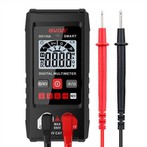
The voltage drop test method using a multimeter is rarely adopted.
For maintenance technicians, diagnosing faults by measuring voltage with a multimeter is a routine operation. However, fault diagnosis based on voltage drop measurement is rarely applied. When properly used, the voltage drop testing method offers irreplaceable diagnostic advantages in many troubleshooting scenarios.
Experiments prove that the maximum allowable voltage loss in any circuit shall not exceed 3% of the supply voltage. For vehicles with a 12 V electrical system, the maximum permissible voltage drop is 0.36 V. If the measured voltage drop exceeds 0.4 V in a circuit, the circuit is regarded as abnormal, indicating the presence of excessive resistance.
(1) Advantages of Voltage Drop Testing over Other Methods
Voltage drop testing is most commonly applied to starting circuits and charging circuits. Traditional resistance measurement methods used by maintenance technicians have obvious limitations and cannot detect hidden potential faults.
For example, in wires with intermittent poor internal contact, resistance measurement with a multimeter resistance range will show a normal resistance value, concealing the actual fault condition and misleading technicians. By contrast, voltage drop testing measures voltage values at different points while cranking the engine, allowing faults in wiring harnesses to be located accurately and efficiently.
(2) Practical Fault Case of Voltage Drop Diagnosis
A Changan minicar required six consecutive replacements of the clutch cable. Each new cable would gradually make the clutch pedal heavy after several days of use.
Upon inspecting the worn cables, deformation was found on the outer sheath and inner plastic lining of the cable housing; severe abrasion marks were also observed where the inner cable contacted the housing. Analysis confirmed the damage was not caused by normal mechanical wear but by external abnormal factors.
Connect the negative probe of the multimeter to the battery negative terminal and the positive probe to the engine housing to measure the ground-side voltage drop. During engine cranking, the reading reached 0.42 V. Further inspection found a loose nut on the ground cable fixed to the transmission bracket, resulting in poor grounding contact between the engine, frame and battery.
After tightening the loose nut and cranking the engine again, the starter operated powerfully, and the voltage drop decreased to only 0.2 V.
Due to poor grounding between the engine and frame during cranking, the return current could not flow normally back to the battery negative terminal and had to seek an alternative path. The clutch cable became an unintended conductive path between the engine and vehicle body, acting as a resistive conductor. Joule heating caused continuous abrasion and damage to both the outer housing and inner cable, leading to premature failure of the clutch cable.