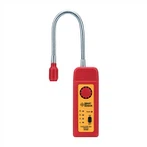
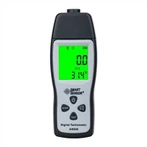
Brief introduction of digital noise meter
Noise meter, also known as (noise meter, sound level meter) is the most basic instrument in noise measurement. Sound level meter is generally composed of capacitive microphone, preamplifier, attenuator, amplifier, frequency meter network and RMS indicator. The working principle of the sound level meter is that the microphone converts the sound into an electrical signal, and then the preamplifier transforms the impedance to match the microphone with the attenuator. The amplifier adds the output signal to the network, carries out frequency weighting (or external filter) on the signal, and then amplifies the signal to a certain amplitude through the attenuator and amplifier, and sends it to the RMS detector.

Noise meter is mainly used to measure environmental noise, do noise engineering, quality control and health prevention. For example, it is used for noise volume measurement in factories, offices, roads, stereos, homes, air conditioners, refrigerators and other occasions.
The national standard of noise meter is GB/T 3785.1-2010. There are two kinds of precision, Level 1 and Level 2. Level 1 has high precision, and the frequency range needs to reach 10Hz-20 kHz.
This instrument is a high-precision noise measuring instrument with LCD display, and the highest accuracy can reach ± 1.5dB.