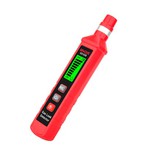
Calibration of pH Meters (Acidometers) for Laboratory Use
When calibrating commonly used laboratory pH meters, the slope of the instrument should be adjusted to the maximum and the rubber plug on the upper part of the electrode should be opened to expose the small hole. Otherwise, negative pressure will be generated during calibration, which will cause the solution to not perform ion exchange properly and result in inaccurate measurement data.
Remove the electrode from the beaker containing distilled water and use filter paper to absorb any remaining distilled water on the electrode.
Then put the electrode into the beaker with the mixing phosphoric acid basin, wait for more than 15 min, and then adjust the positioning knob on the instrument to make the instrument display 6.86 pH. This is the first time to set the reference point for the instrument. After setting the reference point, take out the electrode from the beaker containing the mixed phosphoric acid solution, wash the electrode with distilled water, and place it in the beaker containing distilled water. Wait for about 3 minutes to dissolve the residual part of the mixed phosphoric acid solution.
2. Later, remove the electrode from the beaker containing distilled water and use filter paper to absorb any remaining distilled water on the electrode. Then place the electrode in a solution containing potassium hydrogen phthalate or borax, wait for more than 15 minutes, and observe whether the instrument displays a pH of 4.00 or 9.18. If not, adjust the slope knob on the instrument to display a pH of 4.00 or 9.18, which is the commonly used two-point calibration. If three-point calibration is required, simply repeat the same steps for the other solution. This is the calibration method for acidity meters.
3. After calibration, insert the rubber stopper back. If not in use temporarily, remember to fill the protective cover of the electrode with a saturated solution to keep the electrode moist. This can extend the lifespan of the electrode and reduce its asymmetric potential. Electrodes have a lifespan and are fragile, so laboratories need to replace them frequently. Don't think that just because the electrodes are not damaged during use, they won't be replaced.
4. Before using the composite electrode, first check whether there are cracks or breakage in the glass bulb. If not, perform two-point calibration with pH buffer solution. When the positioning and slope knob can be adjusted to the corresponding pH value, it is generally considered to be usable. Otherwise, follow the instructions for electrode activation treatment. The activation method is to immerse in a 4% hydrogen fluoride solution for about 3-5 seconds, then remove and rinse thoroughly with distilled water; Then soak in a 0.1 mol/L pot acid solution for several hours, rinse with distilled water, and perform calibration. For non enclosed composite electrodes, if the internal solution is less than 1/3, an external reference solution of 3mol/L potassium fluoride solution needs to be added. If the potassium fluoride solution exceeds the position of the small hole, discard the excess potassium fluoride solution and check if there are bubbles in the solution. If there are bubbles, gently tap the electrode to completely remove them. To avoid inaccurate measurement data.