Causes of whistling in switching power supplies
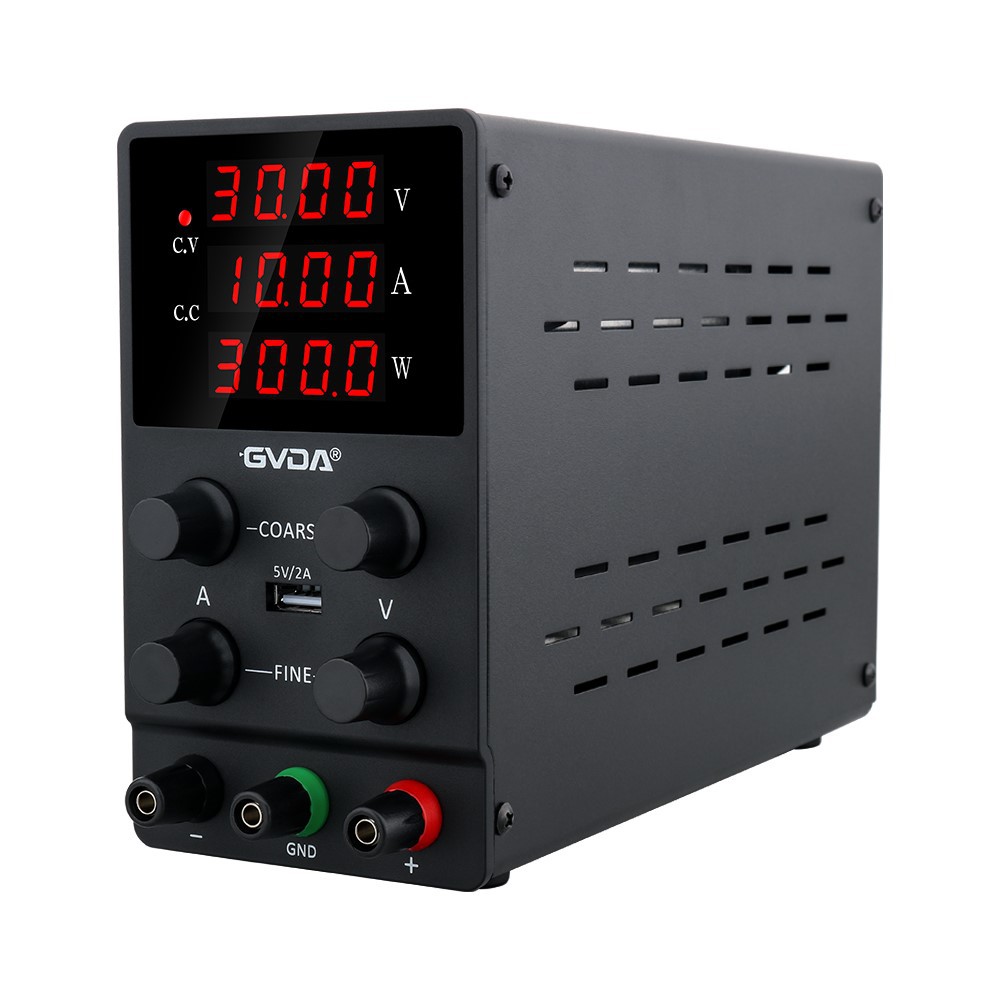
Switching power supply controls the turn-on and turn-off time ratio of the switch tube in the circuit, and maintains a stable circuit voltage output. It is a very common power supply design. However, anyone who has been engaged in the design of switching power supplies knows that in the process of testing switching power supplies, some howling sounds are often heard, similar to the leakage sound when the high voltage is bad, or the sound like high voltage arcing. So when these phenomena appear, how should they be solved?
Generally speaking, the reasons for the whistling of switching power supplies generally have the following incentives.
Poor paint dipping of transformer
Includes unimpregnated varnish. Howling and causing sharp spikes in the waveform, but generally the load capacity is normal, special note: the greater the output power, the stronger the howling, while the performance of low power is not necessarily obvious. A 72W charger product has had poor load experience, and found that there are strict requirements on the material of the magnetic core in this product. It should be added that when the design of the transformer is not good, it is also possible to vibrate and produce abnormal noise during operation.
PWM IC ground trace error
Usually, some products can work normally, but some products cannot be loaded and may not start to vibrate, especially when some low-power ICs are used, they are more likely to fail to work normally. For example, the SG6848 test board, because I did not have a thorough understanding of the performance of the IC at the beginning, I hurriedly laid out it based on experience, and it turned out that the wide voltage test could not be performed during the test.
Optocoupler working current point wiring error
When the position of the working current resistor of the optocoupler is connected before the secondary filter capacitor, there is also the possibility of howling, especially when the load is more.
The ground wire error of the reference regulator IC TL431
Similarly, the grounding of the secondary reference regulator IC has similar requirements to the grounding of the primary IC, that is, it cannot be directly connected to the cold ground and hot ground of the transformer. If they are connected together, the load capacity will decrease and the howling sound will be directly proportional to the output power.
When the output load is large and close to the power limit of the power supply, the switching transformer may enter an unstable state. The duty cycle of the switching tube in the previous cycle was too large, the conduction time was too long, and too much energy was transmitted through the high-frequency transformer; the energy storage inductor of the DC rectifier did not fully release the energy in this cycle, judged by PWM, in the next cycle There is no driving signal to turn on the switch tube, or the duty cycle is too small. The switch tube is in an off state in the whole period afterwards, or the conduction time is too short. After the energy storage inductor releases energy for more than one entire cycle, the output voltage drops, and the duty cycle of the switching tube in the next cycle will be larger... and so on, so that the transformer will have a lower frequency (regular intermittent full cut-off cycle, or the frequency at which the duty cycle varies drastically), emits a lower frequency sound that is audible to the human ear.
At the same time, the output voltage fluctuation will be larger than normal operation. When the number of intermittent full cut-off cycles per unit time reaches a considerable proportion of the total number of cycles, it will even reduce the vibration frequency of the transformer originally working in the ultrasonic frequency band, enter the frequency range audible to the human ear, and emit a sharp high frequency " whistle". At this time, the switching transformer is working in a serious overload state, and it may burn out at any time-this is the origin of many power supplies "screaming" before burning out. I believe that some users have had similar experiences.
When empty or lightly loaded
In this case, the switching tube may also have an intermittent full cut-off period, and the switching transformer is also working in an overloaded state, which is also very dangerous. For this problem, it can be solved by presetting a dummy load at the output, but it still happens occasionally in some "saving" or high-power power supplies.
When there is no load or the load is too light
The back EMF generated by the transformer during operation cannot be well absorbed. In this way, the transformer will couple a lot of clutter signals to the winding. This clutter signal includes many AC components of different frequency spectrums. There are also many low-frequency waves. When the low-frequency waves are consistent with the natural oscillation frequency of your transformer, the circuit will form a low-frequency self-excitation. The magnetic core of the transformer will not make sound. We know that the human hearing range is 20--20KHZ. Therefore, when we design the circuit, we generally add a frequency-selective circuit. to filter out low frequency components. It is best to add a bandpass circuit to the feedback loop to prevent low frequency self-excitation. Or make the switching power supply a fixed frequency.
This article mainly introduces 6 reasons that lead to the howling of switching power supply, and provides corresponding solutions for these 6 reasons. It is an article that is biased towards the basics. I hope that through this article, you can use the methods in the article to solve it yourself when you encounter the howling of the switching power supply.