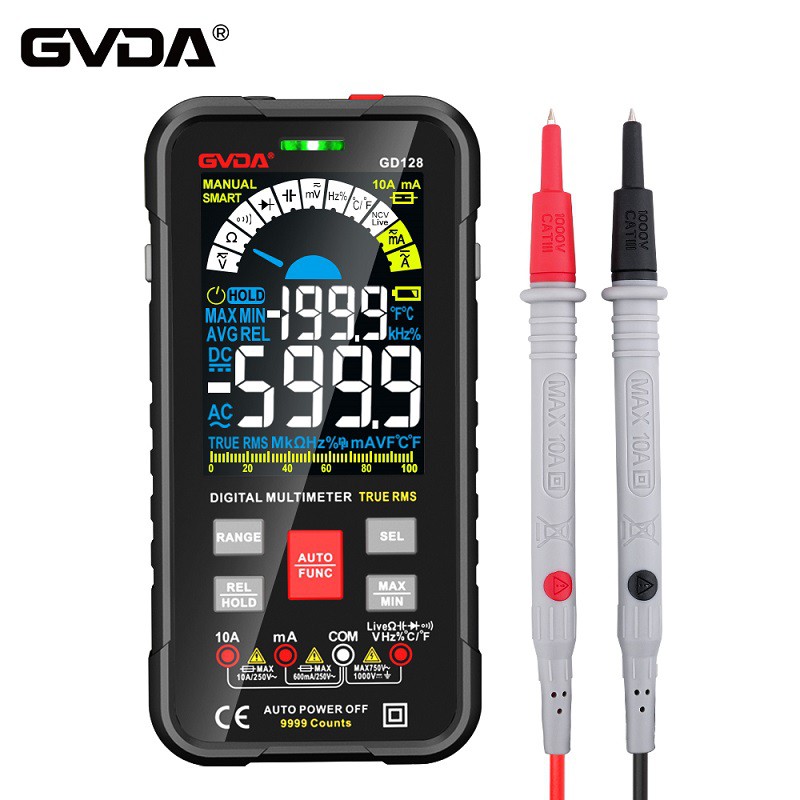
Check the electrostatic ground wire with a multimeter
Requires a ground resistance tester, cannot be tested with a multimeter because the multimeter cannot provide enough current and is referenced to ground.
Detection method of static grounding
A. 0.1 The detection of electrostatic grounding should be carried out under the condition that the detected object is not charged. The measured objects include the grounding system in the equipment, non-metallic materials, anti-static products, etc.
A. 0.2 Equipment grounding measurement shall meet the following requirements:
1 The contact resistance and bridging resistance between the metal parts of the equipment and between the equipment and the special grounding electrode can be measured by ordinary multimeter;
2 The resistance of the equipment grounding electrode, including the contact resistance between the grounding level and the soil, and the flow resistance of the soil, can be measured with the ZC series grounding meter. The distance between the grounding plate and the current electrode should be 40m, and the distance between the voltage electrode and the current electrode should be 20m.
3 The resistance measurement of non-metallic devices in the equipment (such as non-metallic parts for grounding, insulating flanges, etc.) is specified as follows: when the resistance is less than 1MΩ, it can be measured with an ordinary multimeter or megger; when the resistance is greater than or equal to 1MΩ , It can be measured with a megger or a megohmmeter above 500V.
A. 0.3 The measurement of electrical conductivity of non-metallic materials shall comply with the following regulations:
1. Volume resistivity and surface resistivity of plates, films, etc. a. When the volume resistivity is greater than or equal to 106Ω, measure according to the provisions of GB1410-78 in "Test Methods for Solid Electrical Insulation Resistance, Volume Resistivity and Surface Resistivity". Meters can be ZC36, ZC43 and other high-resistance meters. Sample size: square 100×100 (mm) or circular φ100mm. b. When the volume resistivity is less than 106Ω, measure according to the provisions of GB2439-81 "Method for Determination of Electrical Resistivity (Coefficient) of Conductive and Antistatic Rubber", in which the input impedance of electrometer and ammeter is greater than 1012Ω. Sample size: length 70~150mm, width 10~150mm.
2. Fiber leakage resistance is measured according to "Fiber Leakage Resistance Test Method" FJ551-85, where the sample size is 2±0.1g. The test instrument adopts the fiber leakage resistance tester of RC charging and discharging principle.
3. The electrical conductivity of light petroleum products shall be measured according to GB6539-86 "Method for Determination of Electrical Conductivity of Light Petroleum Products". The sample oil is larger than 1L, and the measuring instrument is an oil conductivity tester.
A. 0.4 The measurement of the conductivity of anti-static products shall meet the following requirements:
1. The resistance of anti-static shoes and conductive shoes shall be measured according to GB4386-84 "Measuring Method of Resistance Value of Anti-static Rubber-soled Shoes and Conductive Rubber-soled Shoes". When R≥1.5×10⁵Ω, the measurement voltage is 500±25V; when R<1.5×10⁵Ω, the measurement voltage is 100±5V, and the test electric power is not more than 3W.
2. The resistance of the floor, carpet and other floor coverings is measured with 2 special electrodes of φ60±2mm (weight 2±0.2kg, chrome-plated brass), the distance between the measuring electrodes is 1m, and a conductive sponge (diameter φ60mm, thickness 5~6mm, volume resistivity 0.1~1Ω). The measuring instrument can be an insulation resistance tester with a DC open circuit voltage of 500V and a short circuit current of 5mA.