Clamp Meter - Alternative Method for Measuring Resistance
1. Current equivalent substitution method
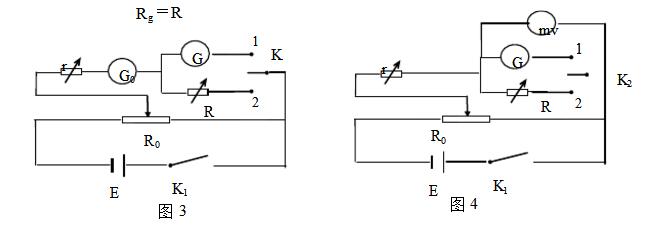
The circuit shown in Figure 3, G is the ammeter to be tested, G0 is the auxiliary ammeter, the range is the same as G or slightly larger, r is the protection resistor, R0 is the sliding rheostat, K1 is the single-pole switch, and K2 is the single-pole double-throw switch. When measuring, set r to the maximum first, close the switch K1, pull K2 to the 1 terminal to connect the ammeter G, adjust R0 and r, so that the pointer of the auxiliary ammeter G0 reaches a certain scale value close to the full range (note that I cannot be greater than the ammeter G range). Then set the resistance value of the resistance box R to the maximum value, pull K2 to the 2 terminal to connect the resistance box R, gradually reduce the resistance value of the resistance box, when the pointer of the auxiliary ammeter G0 still points to the original scale value I , the resistance value R indicated by the resistance box is equal to the internal resistance Rg of the ammeter G, that is
What is the internal resistance of the ammeter_Several methods of measuring the internal resistance of the ammeter
2. Voltage equivalent substitution method: The circuit shown in Figure 4, mv is a millivolt meter used as an auxiliary meter, and its range is the same as or slightly larger than the pressure drop of the ammeter G to be tested. The ammeter G to be tested and the resistance box R is respectively connected in parallel with the millivolt meter mv through the single-pole double-throw switch K2. When measuring, first close K1, pull K2 to 1 terminal, adjust the sliding rheostat R0 and r, so that the pointer of the ammeter to be tested is close to the full scale value, and the pointer of the millivolt meter points to a certain scale value U. Then disconnect K1, set the resistance value of the resistance box to zero, pull K2 to terminal 2, then close K1, and gradually adjust the resistance value of the resistance box so that the pointer of the millivolt meter still points to the original scale value U, at this time , the resistance value R indicated by the resistance box is equal to the internal resistance Rg of the ammeter, namely: