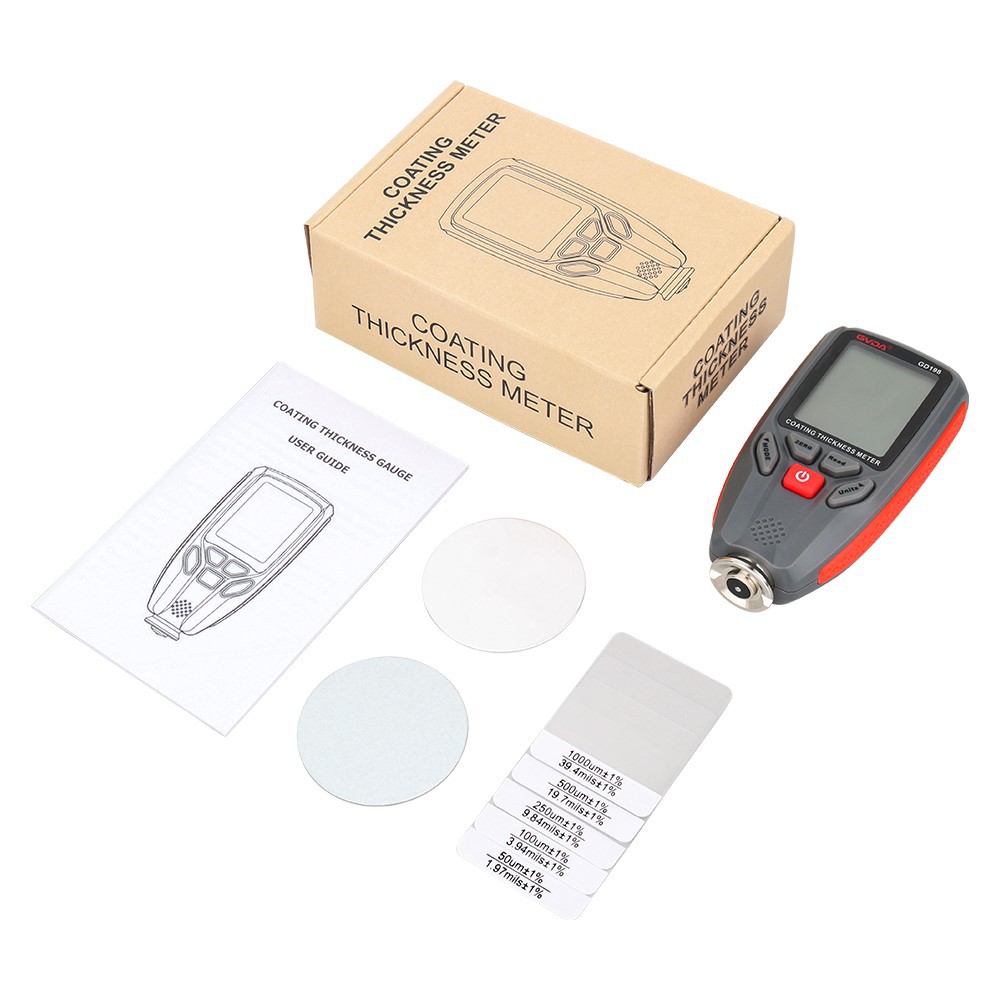
Classification and application of coating thickness gauge
1, Magnetic thickness measurement method: suitable for measuring the thickness of non-magnetic layers on magnetic materials Magnetic materials are generally steel, iron, silver, and nickel, and this method has high measurement accuracy
2, Eddy current thickness measurement method: suitable for measuring the thickness of non-conductive layers on conductive metals, this method has lower accuracy than magnetic thickness measurement method
3, Ultrasonic thickness measurement method: Currently, there is no such method used in China to measure the thickness of coating layers. Some foreign manufacturers have such instruments, which are suitable for measuring the thickness of multi-layer coating layers or situations where neither of the above methods can measure it. However, they are generally expensive and the measurement accuracy is not high
4, Electrolytic thickness measurement method: This method is different from the above three methods and does not belong to non-destructive testing. It requires the destruction of the coating layer The general accuracy is also not high Measuring is more complicated than other methods
5, Radiometric thickness measurement method: This instrument is very expensive and suitable for some special occasions
Common Problems in Coating Thickness Gauge Probes
Firstly, it is normal for the probe to wear out during use. But if users pay attention to its characteristics, it will prolong its service life.
The common problem is that during measurement, due to the usual downward testing, users often exert more force on the downward pier, which can easily cause the failure of the probe core over time. The correct method of use is to gently press the probe towards the surface of the workpiece being measured when it is one centimeter away, as the probe is designed with a built-in sensing pressure spring that only needs to be gently pressed down. On the other hand, during the repeated movement of the probe, it is easy to collide, bump, or collide with other objects, which can also cause damage to the probe. Therefore, if working conditions permit, the probe can be fixed and the workpiece being measured can be brought into contact with the probe to reduce the probe's collision.
There is also a situation where, during measurement, the measuring head must be lifted and not pulled flat every time the next point is measured, in order to reduce the wear of the magnetic core.
Finally, the probe must be kept away from strong magnetic fields to avoid changing the natural frequency of the probe and causing it to malfunction. The correct operation and usage method can extend the service life of the instrument.